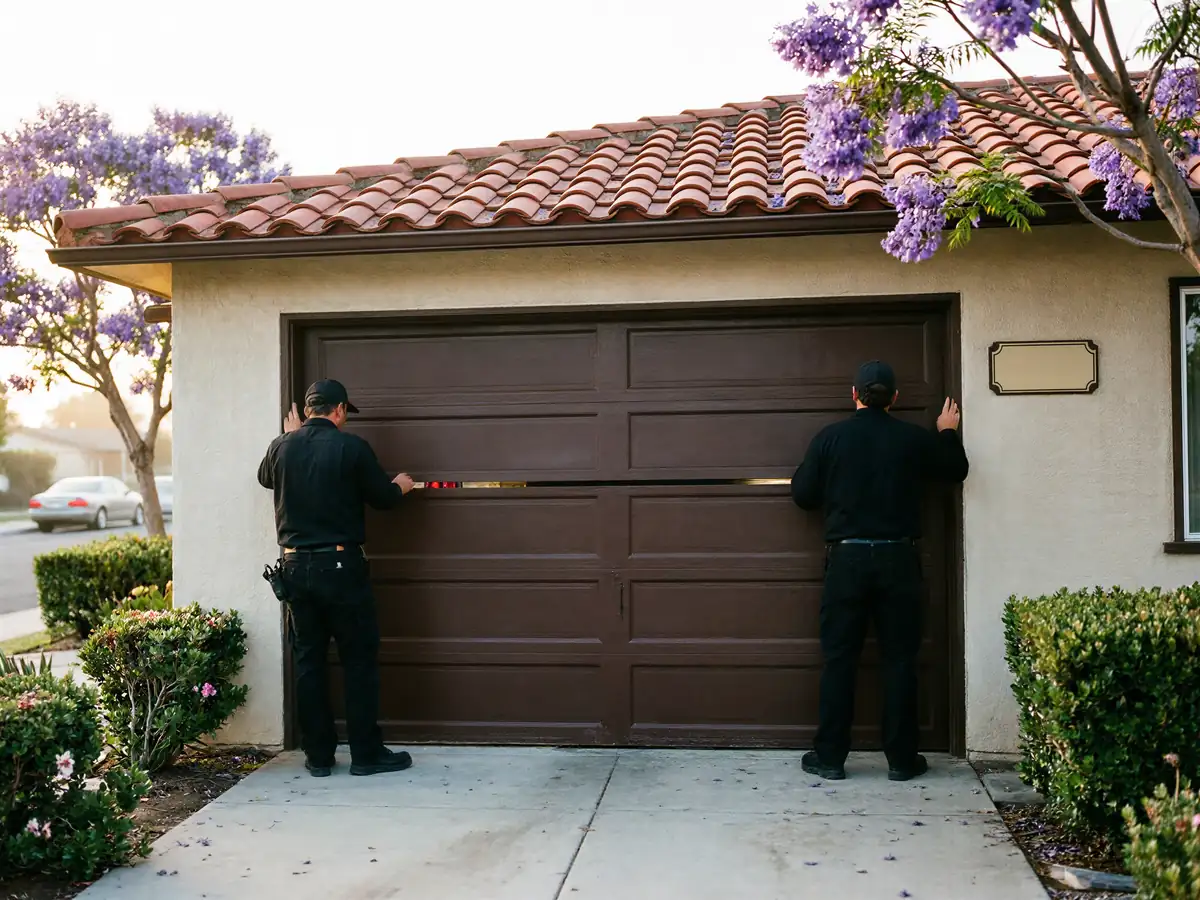
Berkeley's housing dates to 1946 on average, nearly two decades older than most of the area this company covers. That older hardware comes off track differently. Here's why.
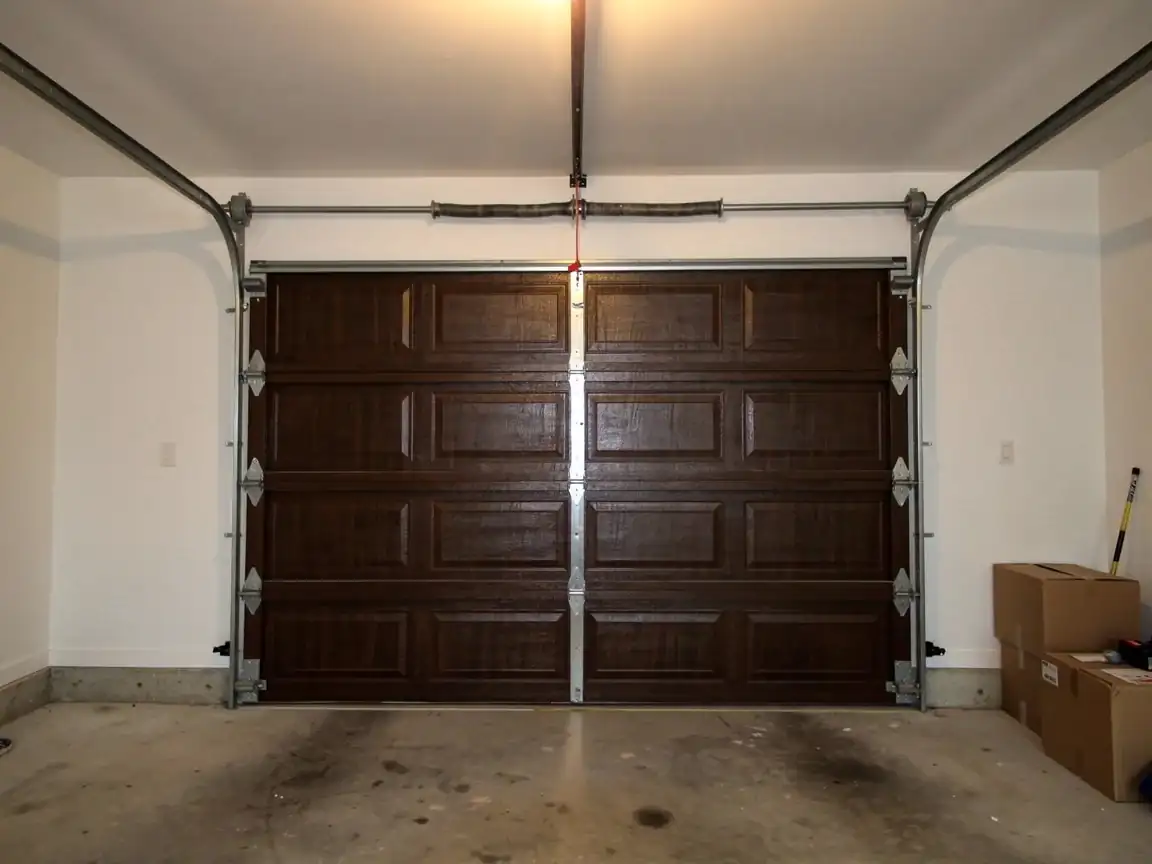
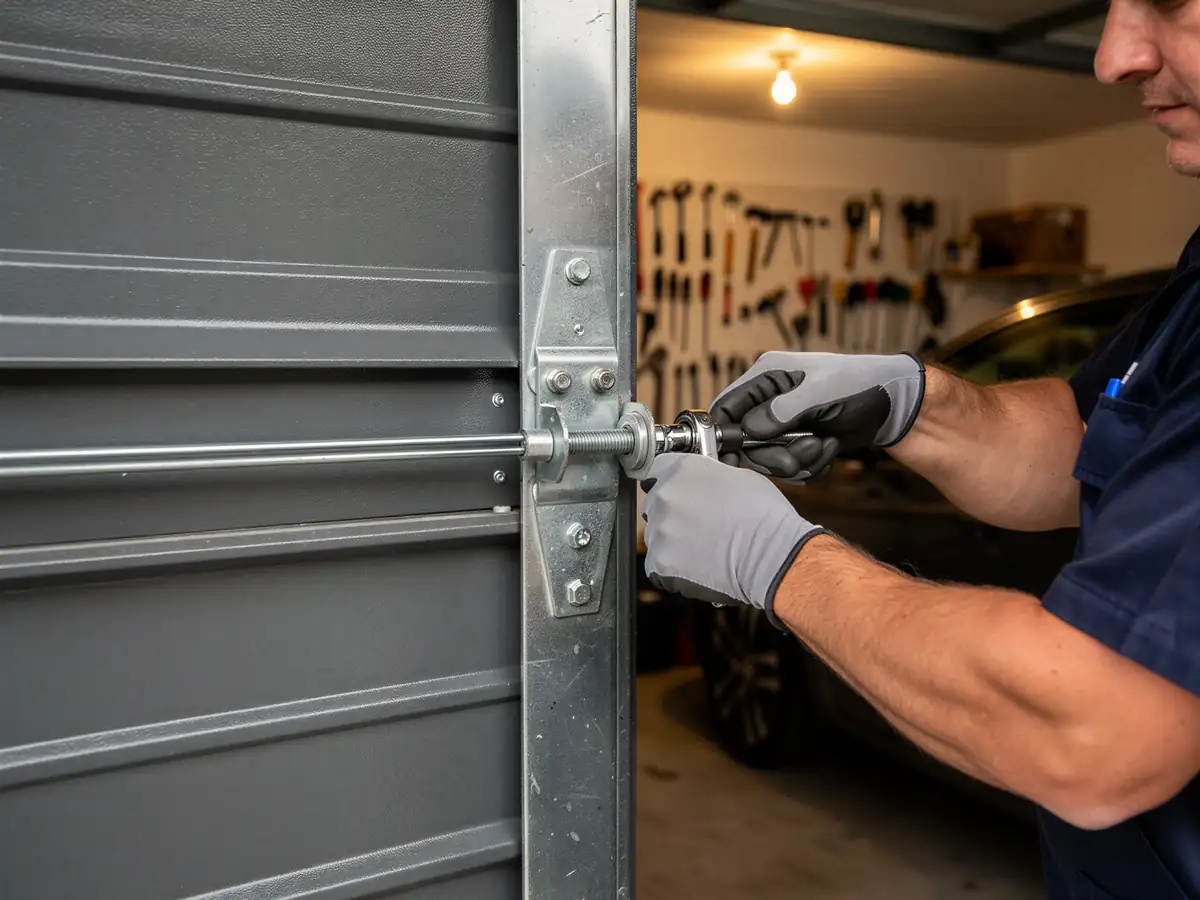
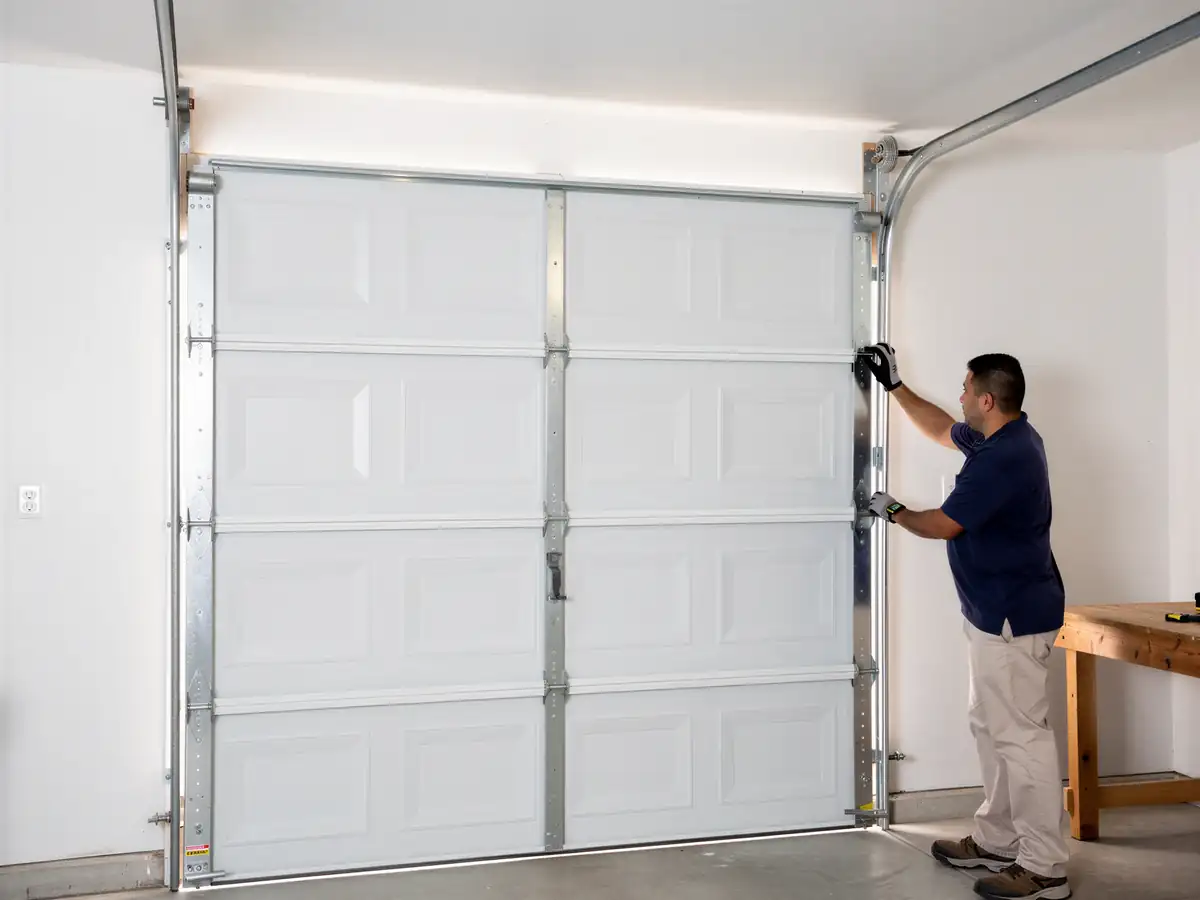
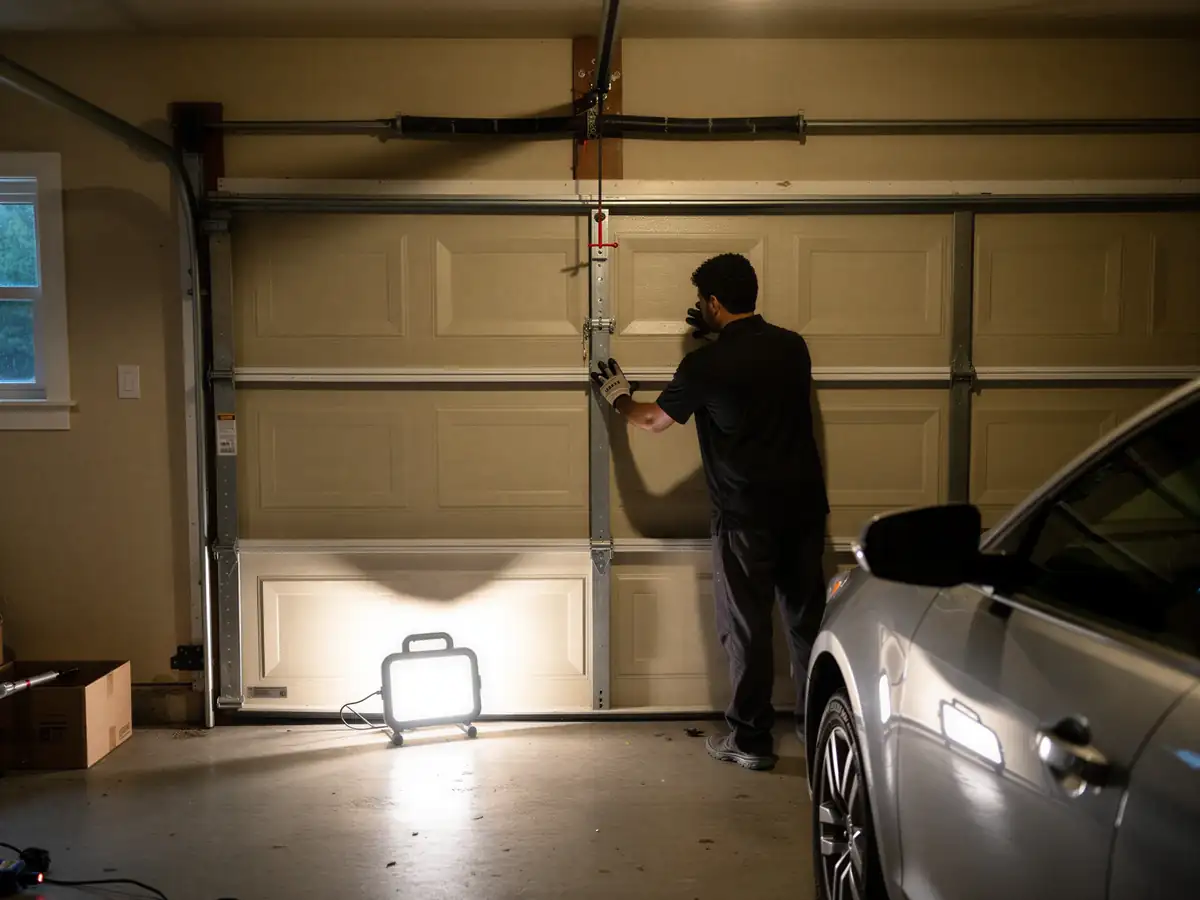
A door that's jumped its track in Berkeley usually isn't fighting the same hardware as a door in a 1965-built house across the rest of the service area. Berkeley's housing stock centers on 1946, which means a good share of these garages still carry track brackets and roller carriages sized to narrower, lighter sectional doors than what's standard now. Getting the door back on track here starts with checking whether the track itself is still straight or whether the bracket pulled loose from framing that's pushing eighty years old. On a newer door, you reseat the rollers, true up the track, and you're done in one visit. On an older frame, the fasteners may be stripped, the wood behind the bracket may have shrunk or split, and the fix has to account for that before the door goes back in the track at all. We bring stock to cover both cases, but we won't pretend a cracked jamb and a bent track are the same job.
Why It Happens Here
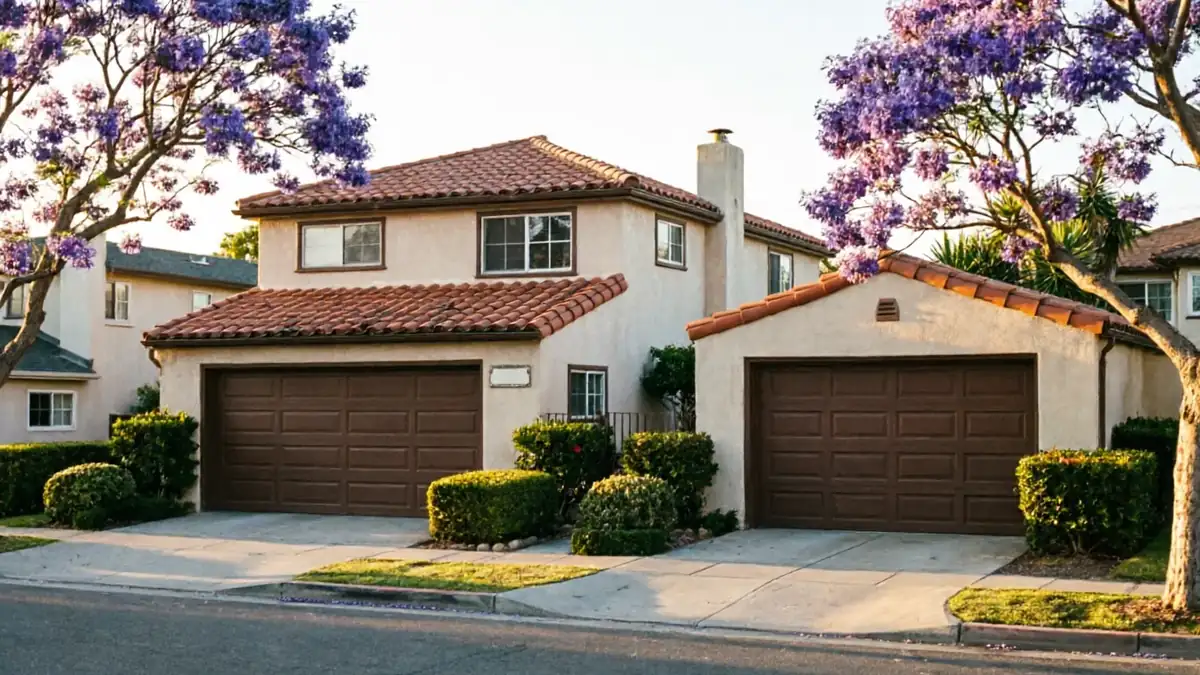
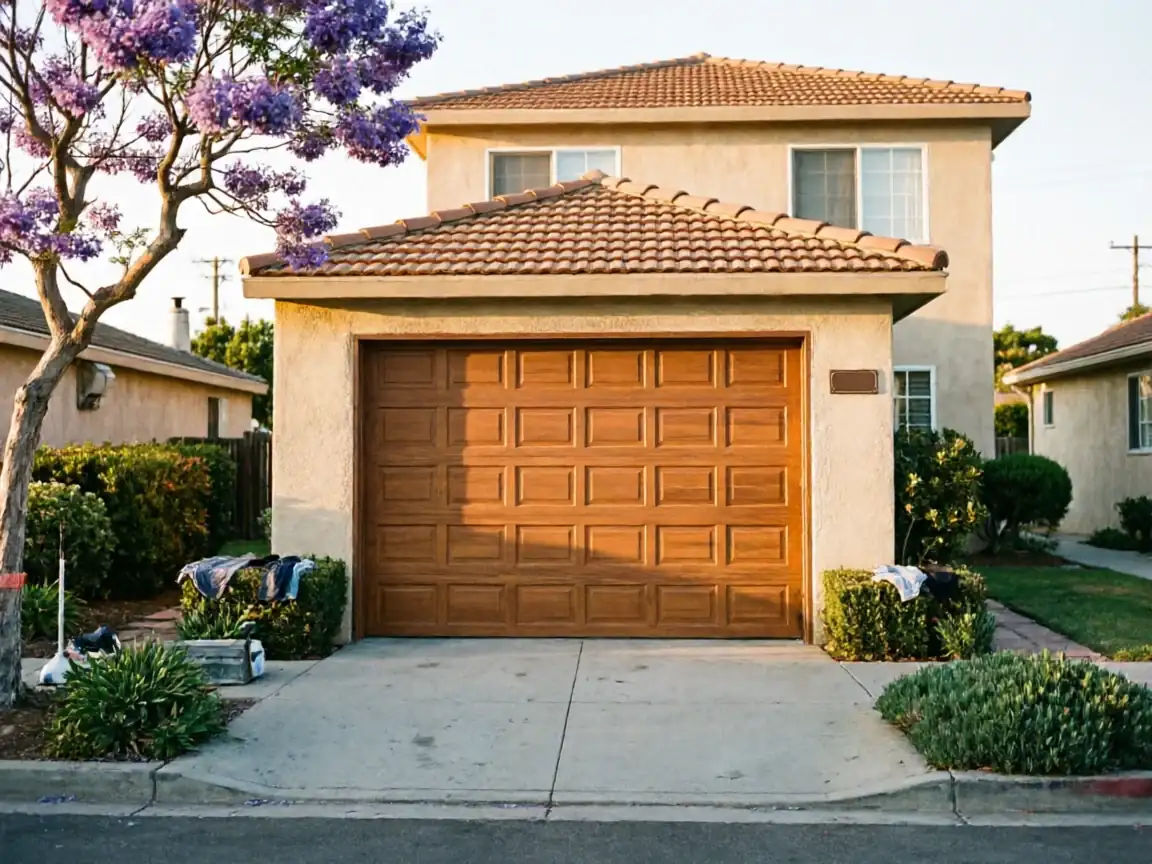
Most of the broader area this company covers was built up in the 1960s and 70s, with track and roller hardware to match. Berkeley runs earlier than that. A door track hung in 1946 was set for a lighter door and a different roller profile, and decades of small shifts in the garage framing since then have nudged a lot of those tracks slightly out of plumb without anyone noticing, because the door still opened fine. It's the kind of slow drift that doesn't announce itself until a roller finally walks off the rail. Mild coastal temperatures here don't stress hardware the way freeze-thaw climates do, so corrosion and cracked plastic rollers aren't usually the driver. It's age and settling, not weather.
What Can Go Wrong
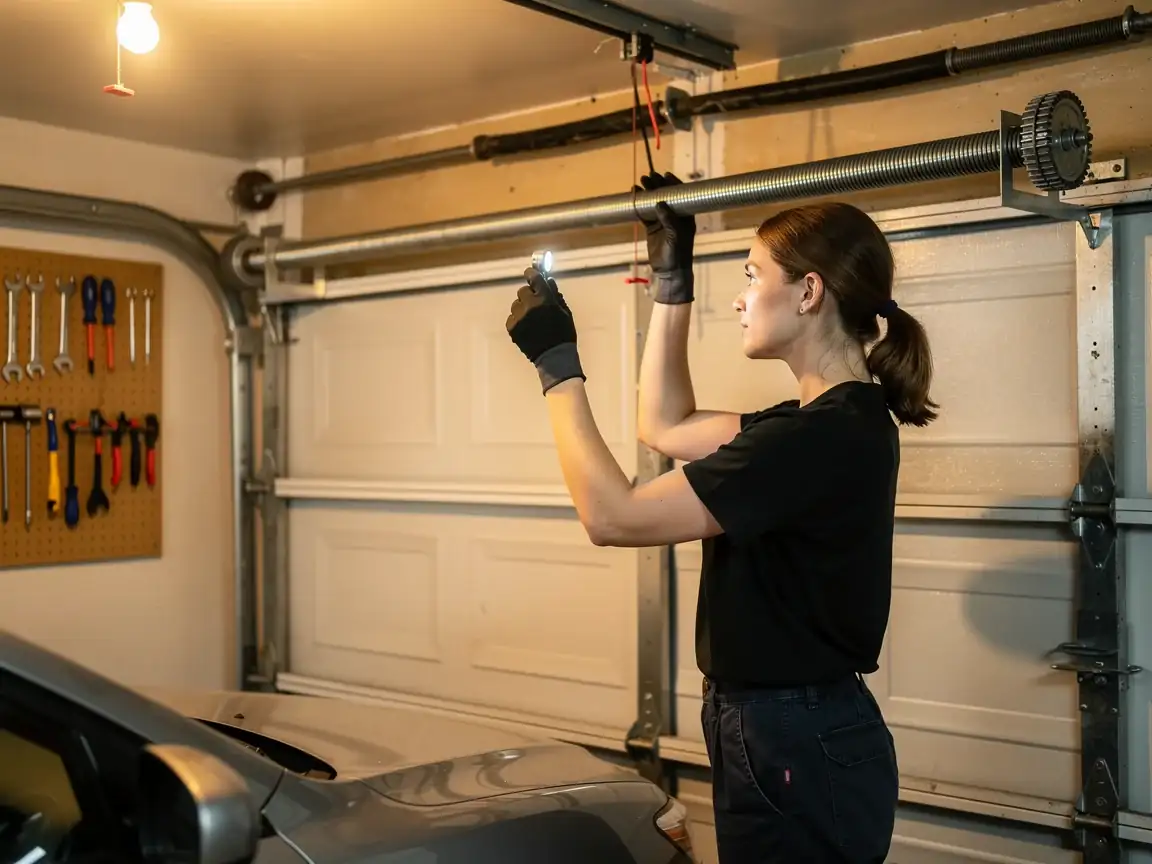
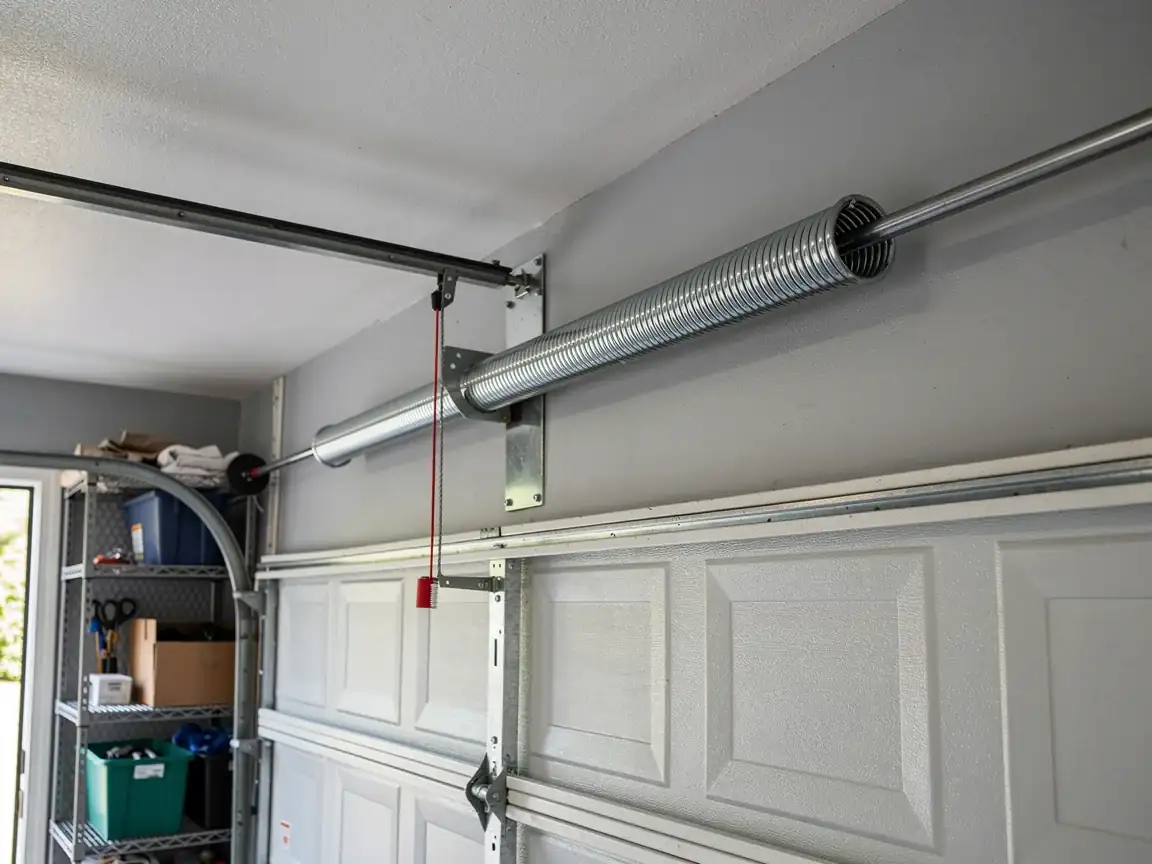
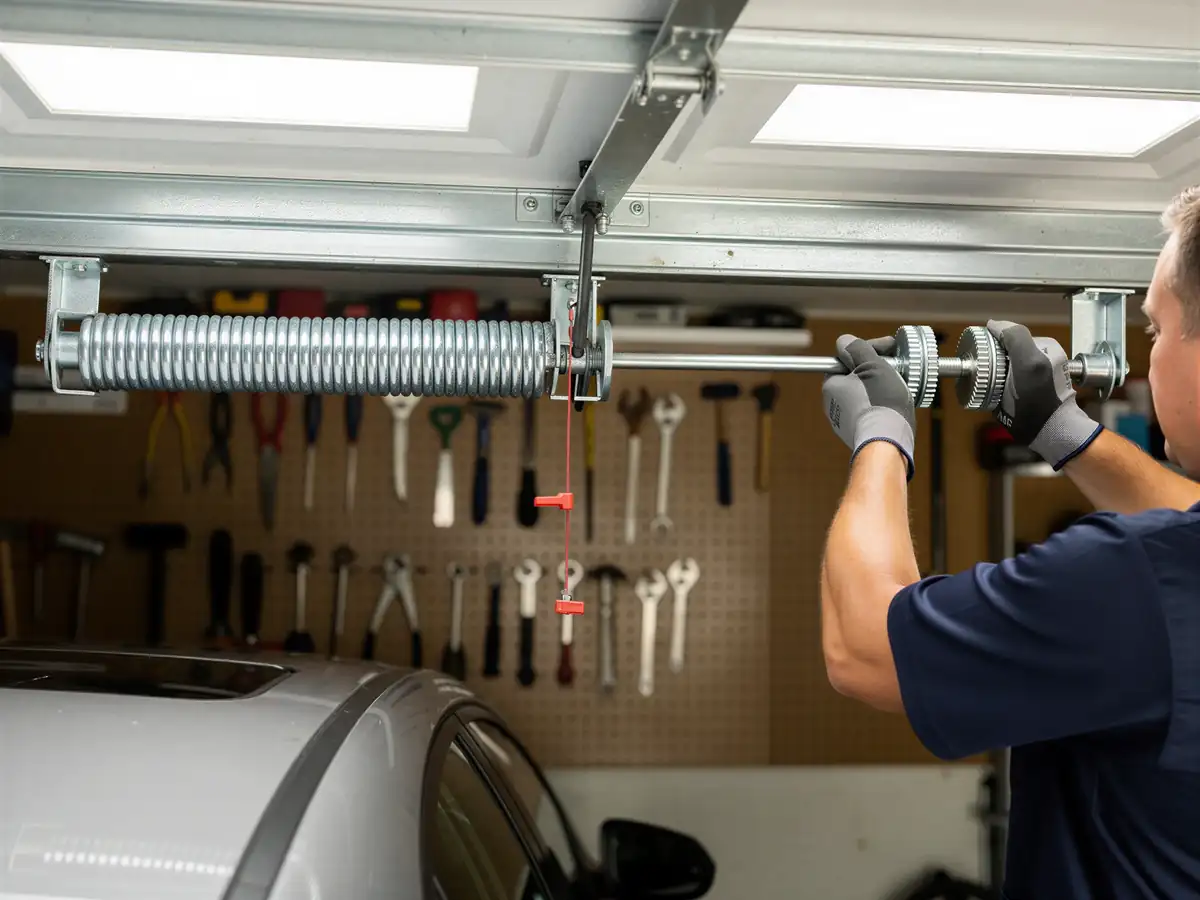
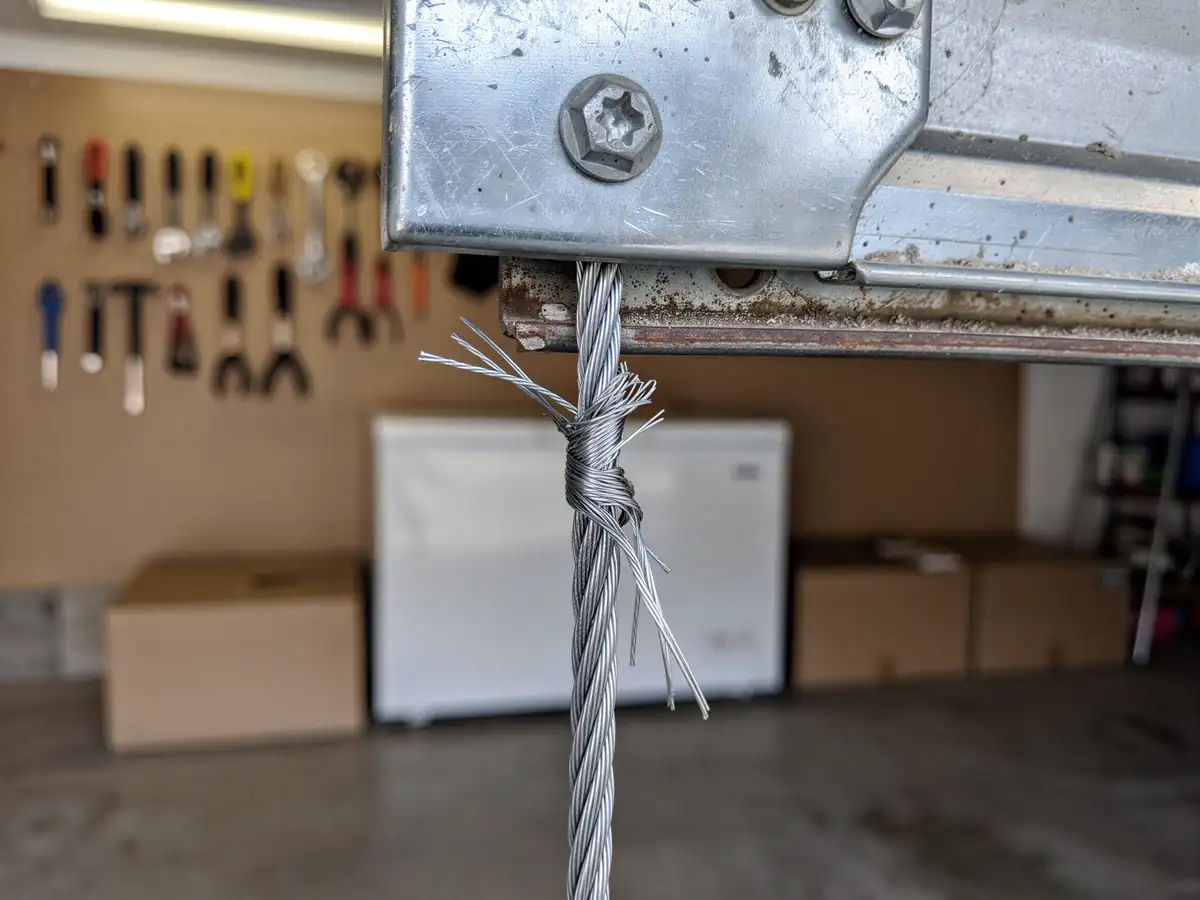
The most common version is a single roller popping out of the track on one side, usually near the bottom where the door takes the most load opening and closing. Less common but harder to fix: the whole track pulling away from an aging bracket, which on a 1940s-era wall means dealing with lath, old studs, or a jamb that's no longer square. Cables can also jump their drum when a door comes off track under tension, and on these older setups that sometimes means an extension spring assembly overhead rather than torsion springs mounted above the opening - a different repair, different parts. We don't force a door back onto a track that's visibly bent; forcing it just loads the opener and strips the next roller too.
Getting It Booked In
We run this repair out of Oakland, about 8 miles from Berkeley, so there's no local branch here - just a truck that comes to you. When you call, tell us the door's age if you know it and whether it's stuck open, stuck closed, or hanging at an angle, because that changes what we load on the truck before we leave. Berkeley's roughly 46,762 households skew toward older homes than the rest of the service area, and the median household income here runs lower than the area-wide $148,801 - we mention that because parts cost is often the real question homeowners have, not just whether we can get the door back on track.
The Symptom
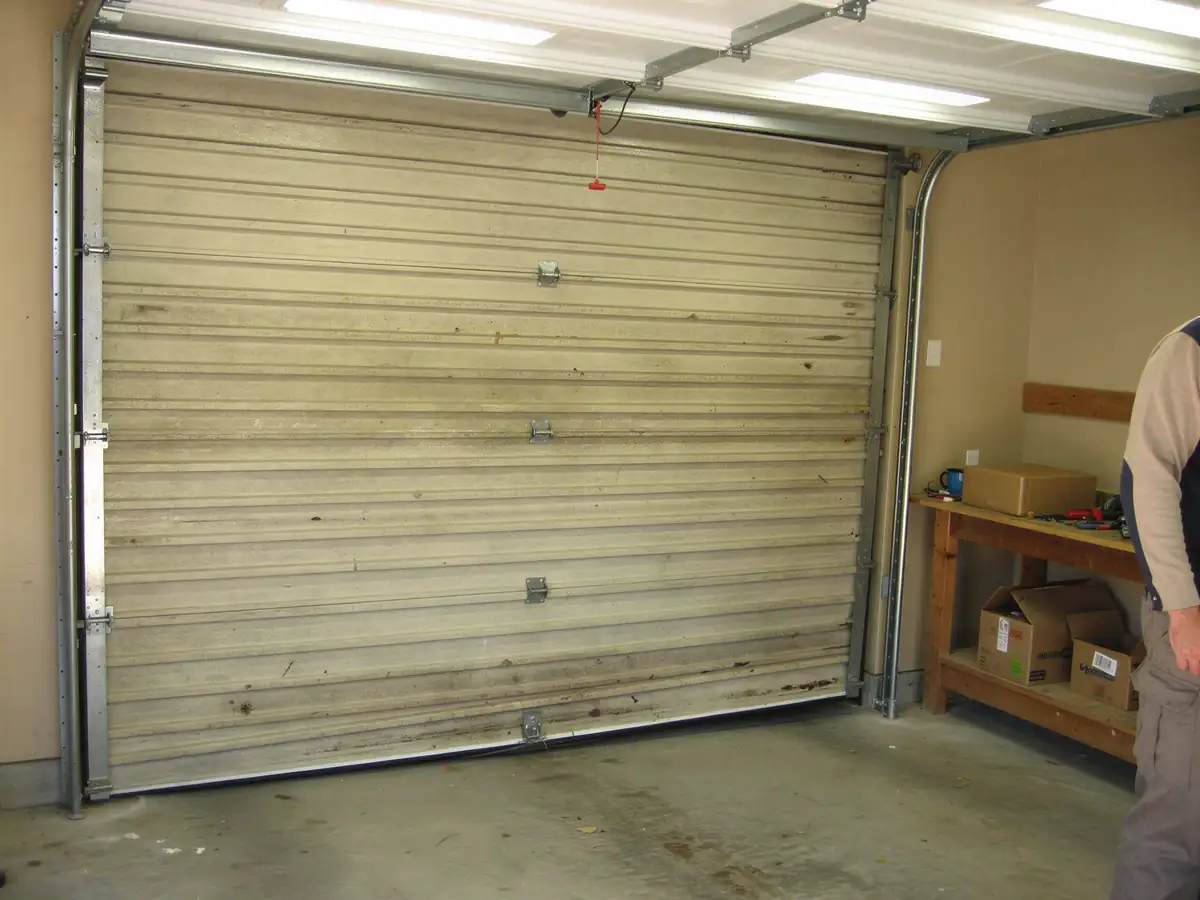
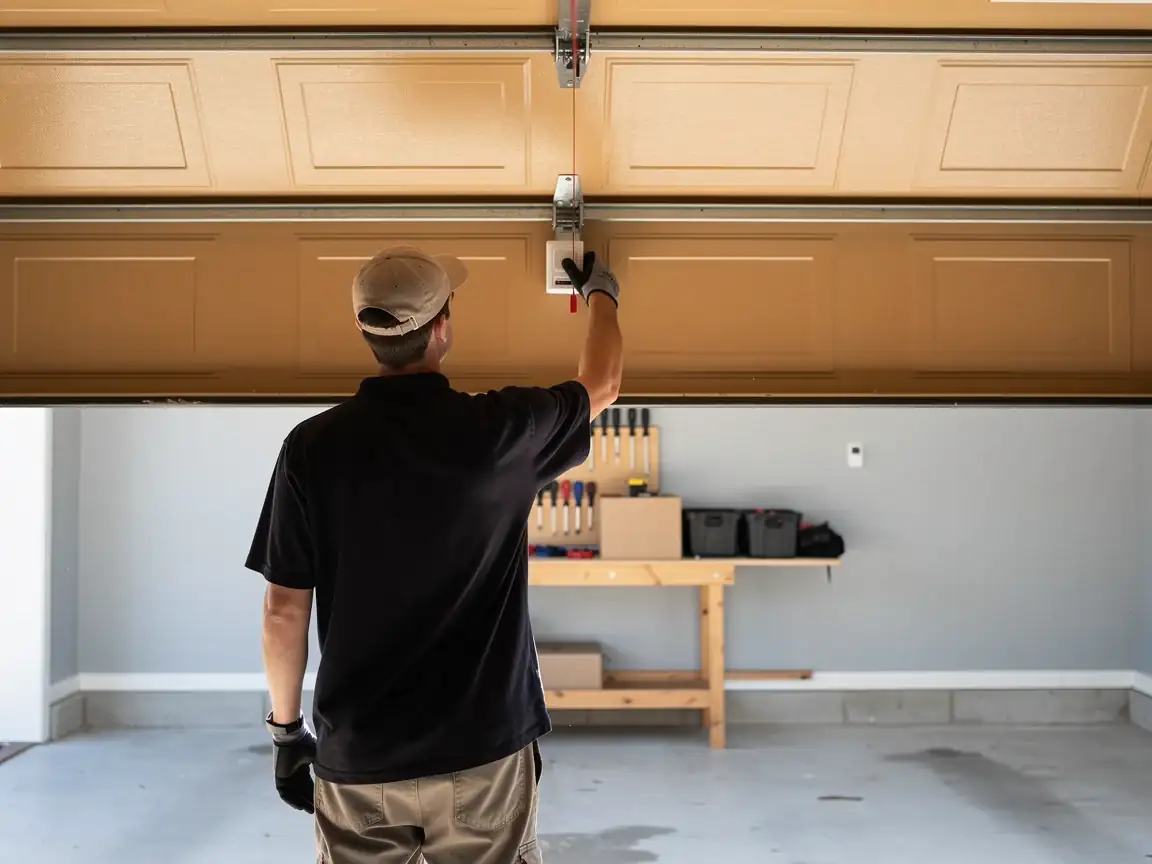
The giveaway is usually a door that stops partway, tilts to one side, or makes a grinding or popping sound right before it jams. Sometimes you'll see the roller itself sitting outside the track channel, which is the clearest sign. If the door still closes but drags or scrapes along one edge, that's often an early version of the same problem - a track working loose before a roller actually leaves it. Catching it at that stage is cheaper than waiting for the door to jump the track entirely, especially on an older frame where the bracket underneath may already be compromised.
How it works
From “it’s stuck” to “it’s fixed”
01
Tell us what’s wrong
Describe the symptom - won’t open, loud bang, opener runs but the door won’t move.
02
On-site diagnosis
A technician tests the door under power and by hand and finds what actually failed.
03
Clear, up-front plan
You get the fix that’s needed and what drives the cost - before any work starts.
04
Repaired & tested
The repair is done, the door is set true and tested, and the work area left clean.
Not sure which repair your door needs in Oakland, CA? Describe what it’s doing - every job starts with a diagnosis.
Straight answers about garage door repair in Oakland. Still unsure? Ask us directly.
Is my door off track because of the age of the house?
It can be a factor. Berkeley's housing runs older on average than much of the area, closer to 1946 than the 1960s-70s stock common elsewhere. Older brackets and framing shift over decades, which can nudge a track out of alignment slowly. Not every off-track call is age-related, but it's common enough here that we check the bracket and framing before we just reset the rollers.
Can you just push the door back onto the track yourself?
Sometimes, if it's a single roller and the track is still straight. We'd rather look at it first, because forcing a door back on when the track is bent or the bracket is loose usually makes the next failure worse and can strip the roller or stress the opener.
Do you have a branch in Berkeley?
No. This repair is done by a truck out of Oakland, about 8 miles away. There's no local office or depot in Berkeley - we just bring what the job needs with us.
Will an older door cost more to fix?
It can, if the track hardware or roller size is no longer common stock, or if the bracket needs reinforcing in older framing. We'll tell you on site what the job actually needs before doing any work.