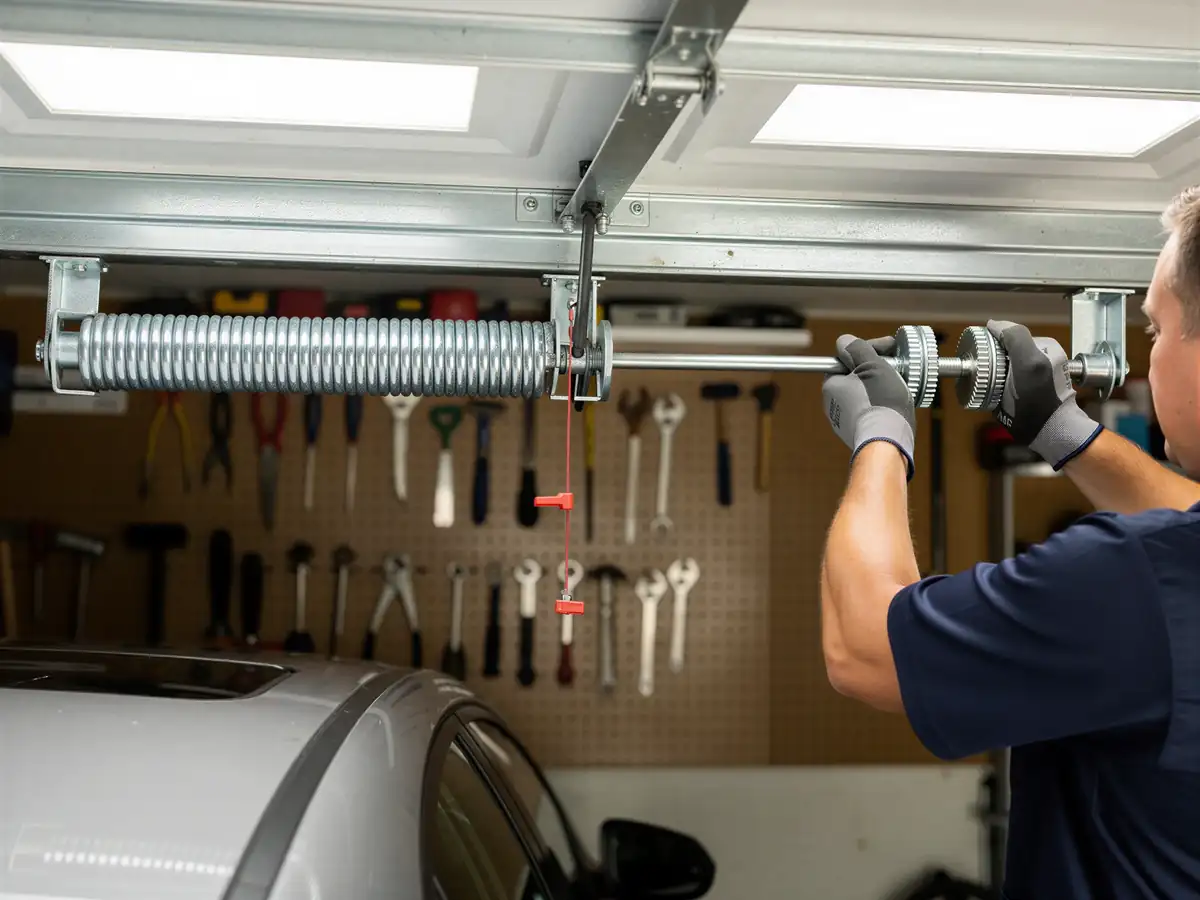
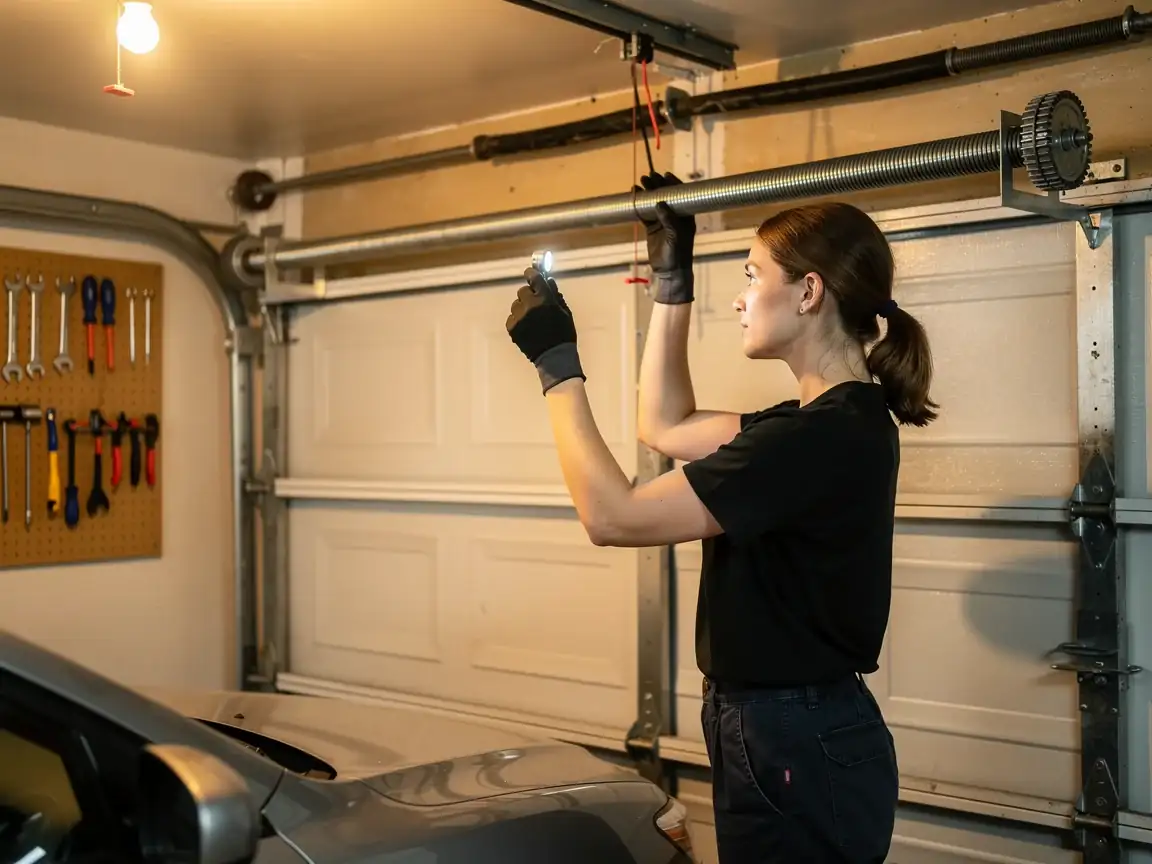
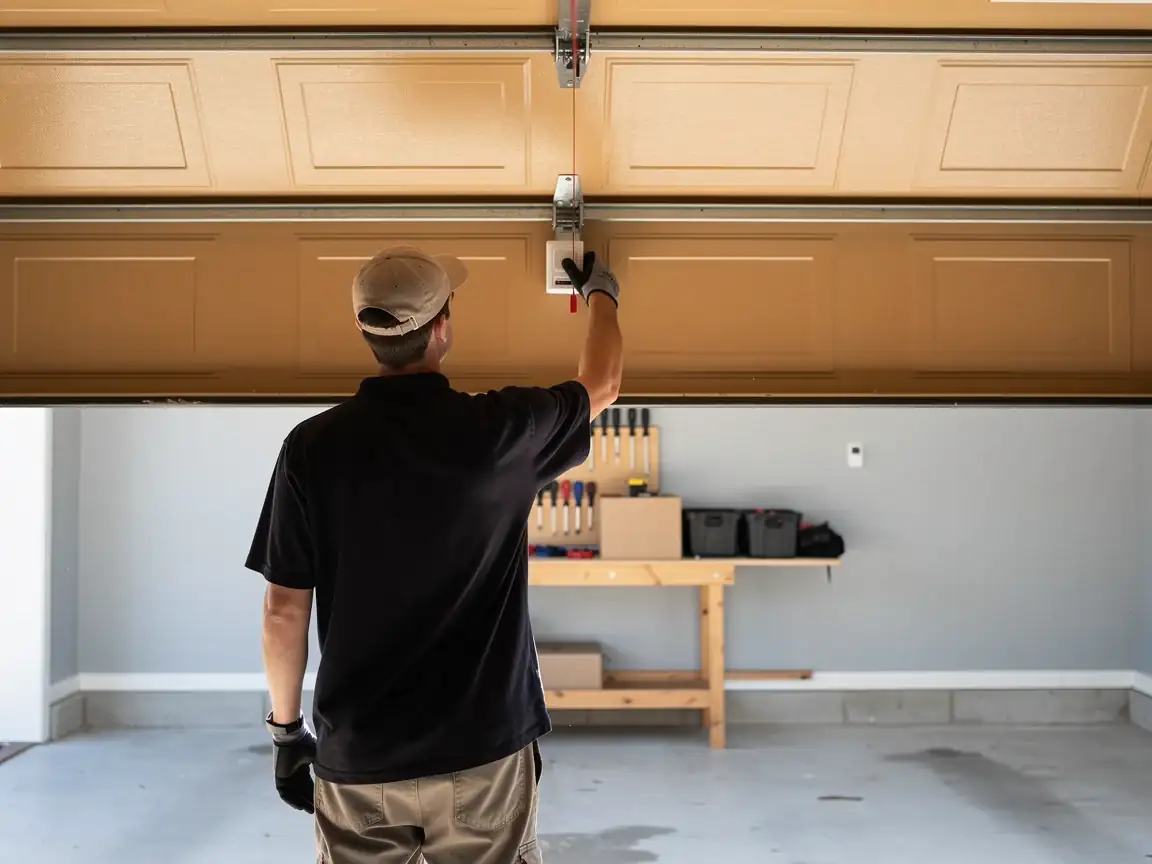
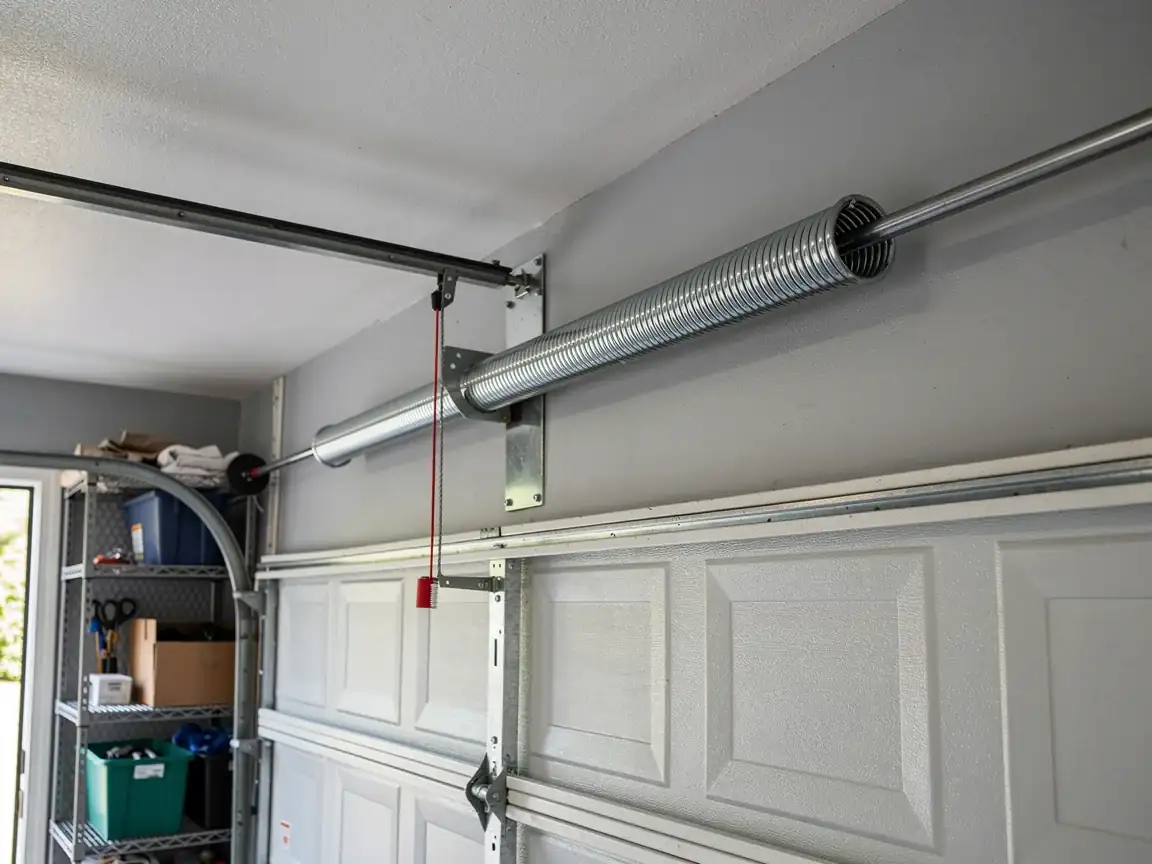
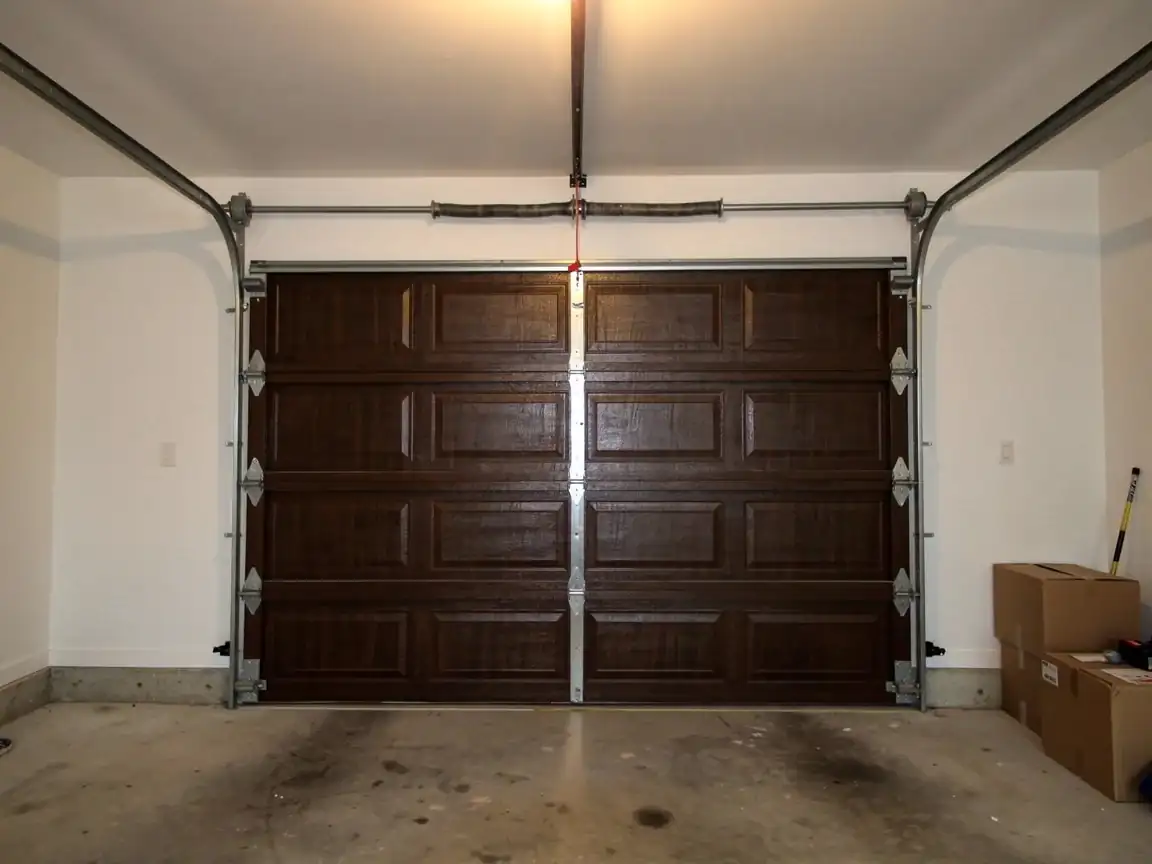
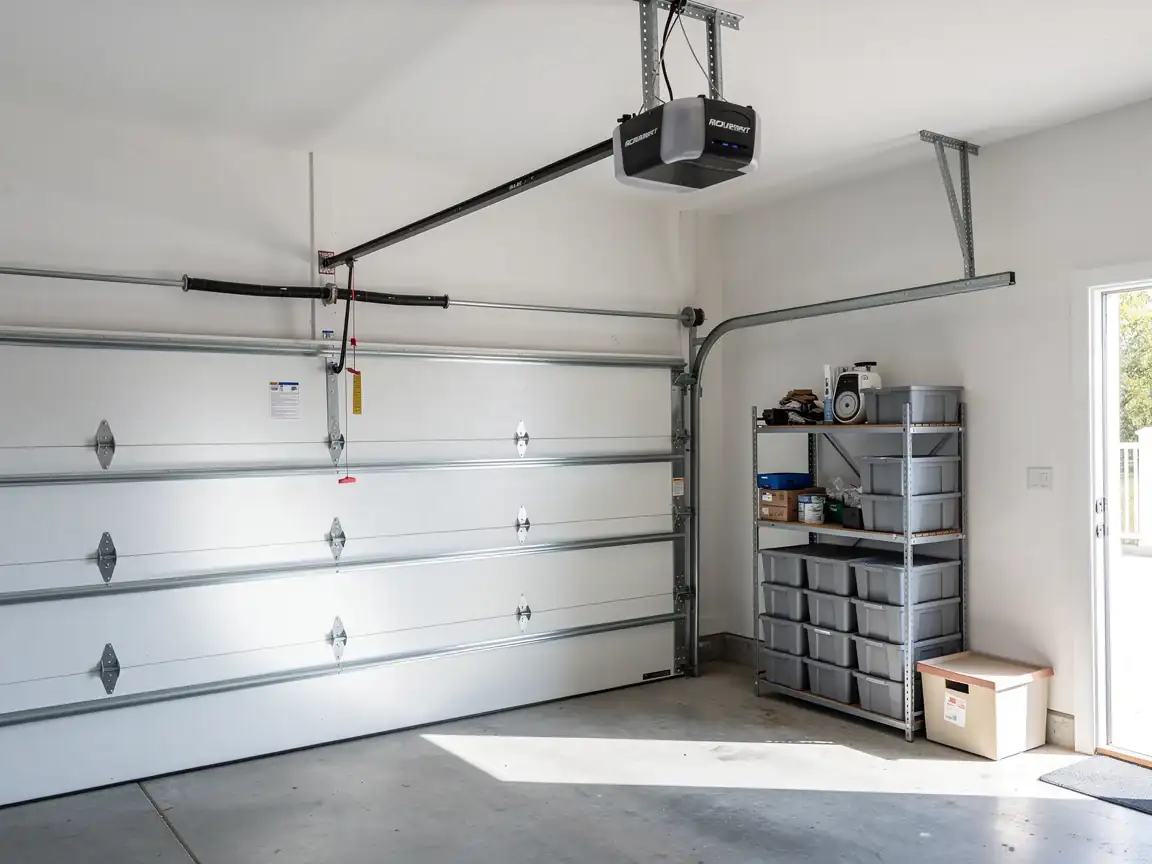
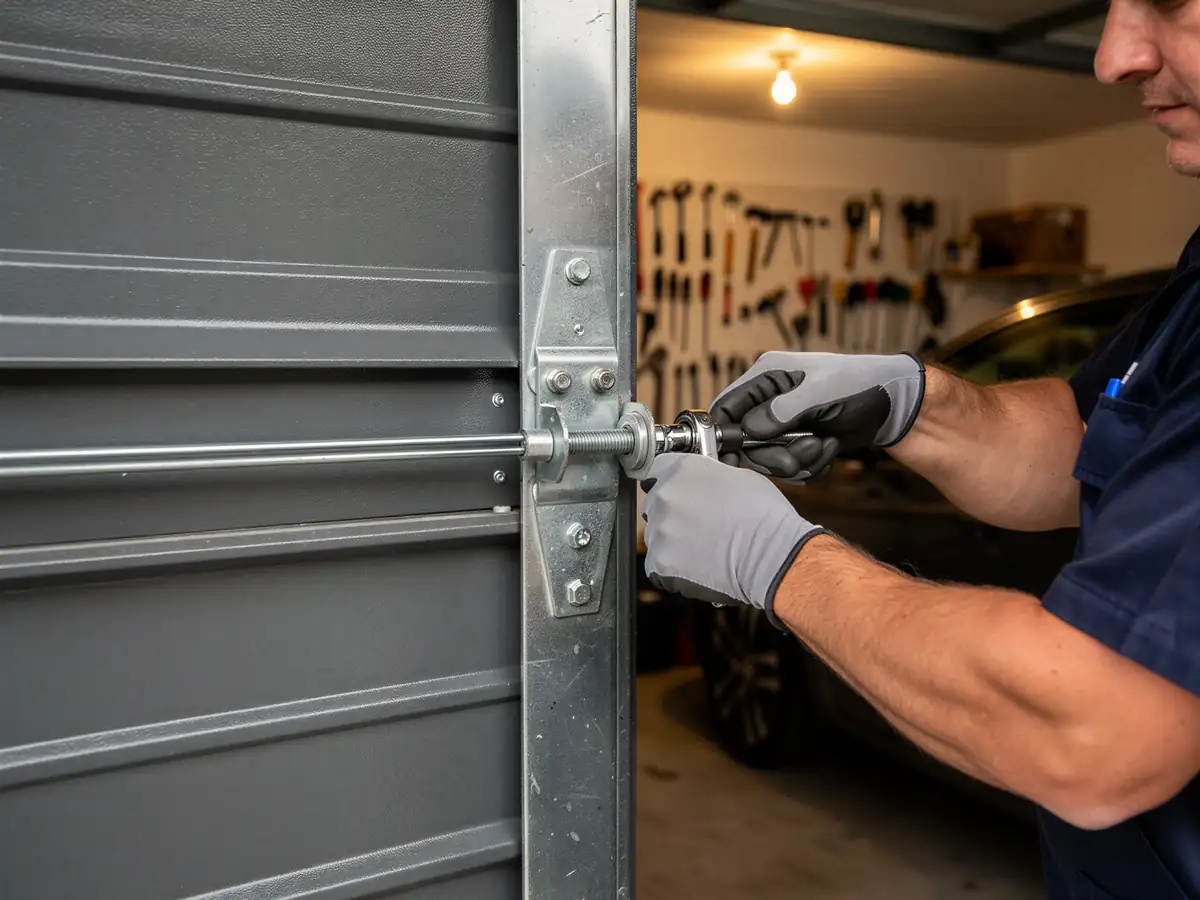
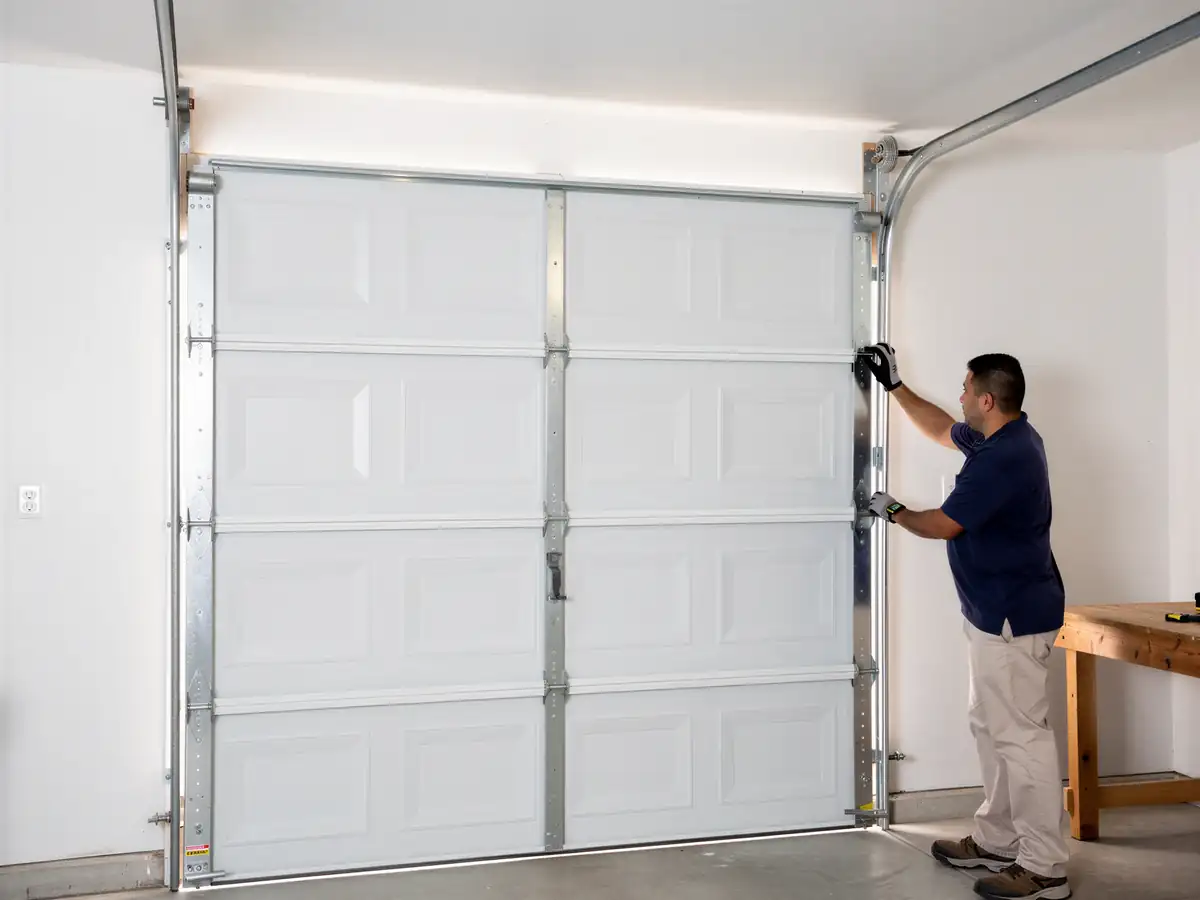
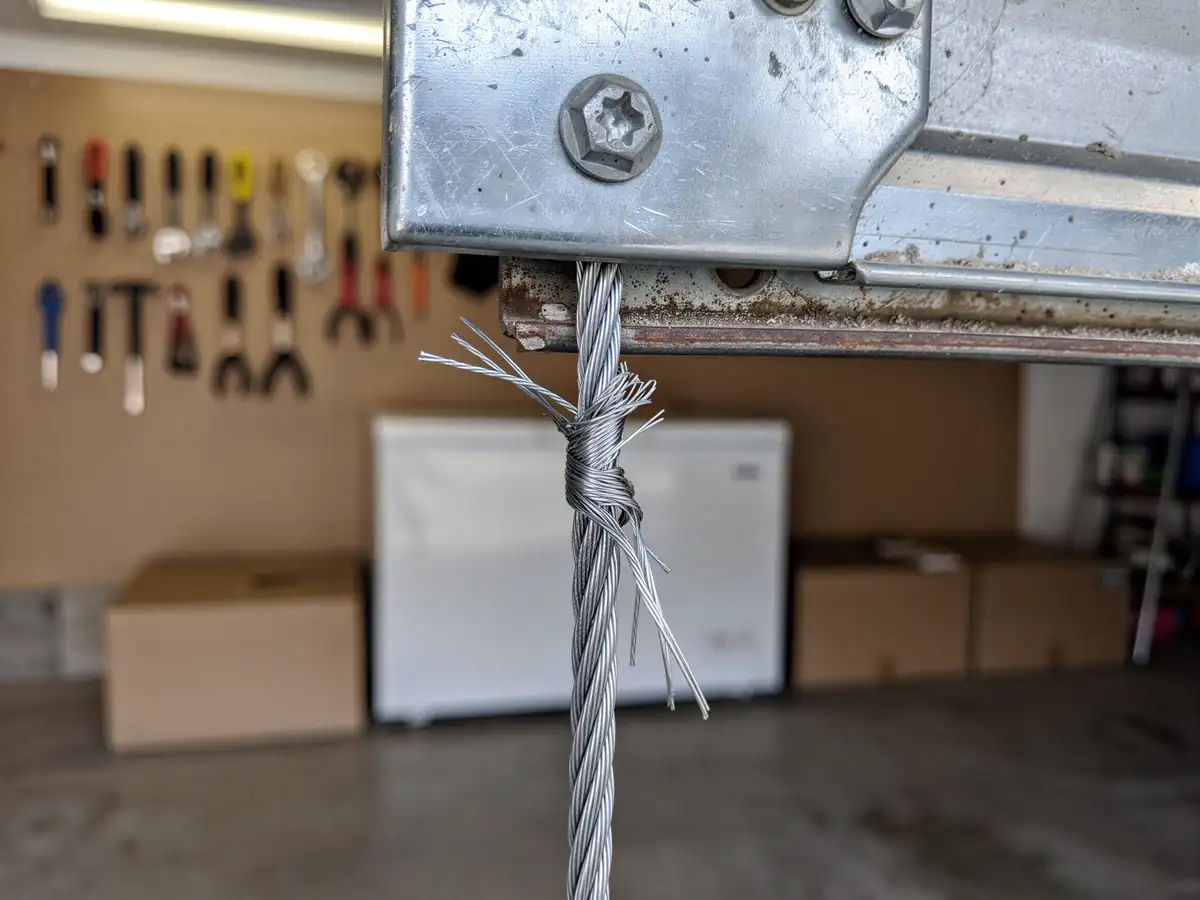
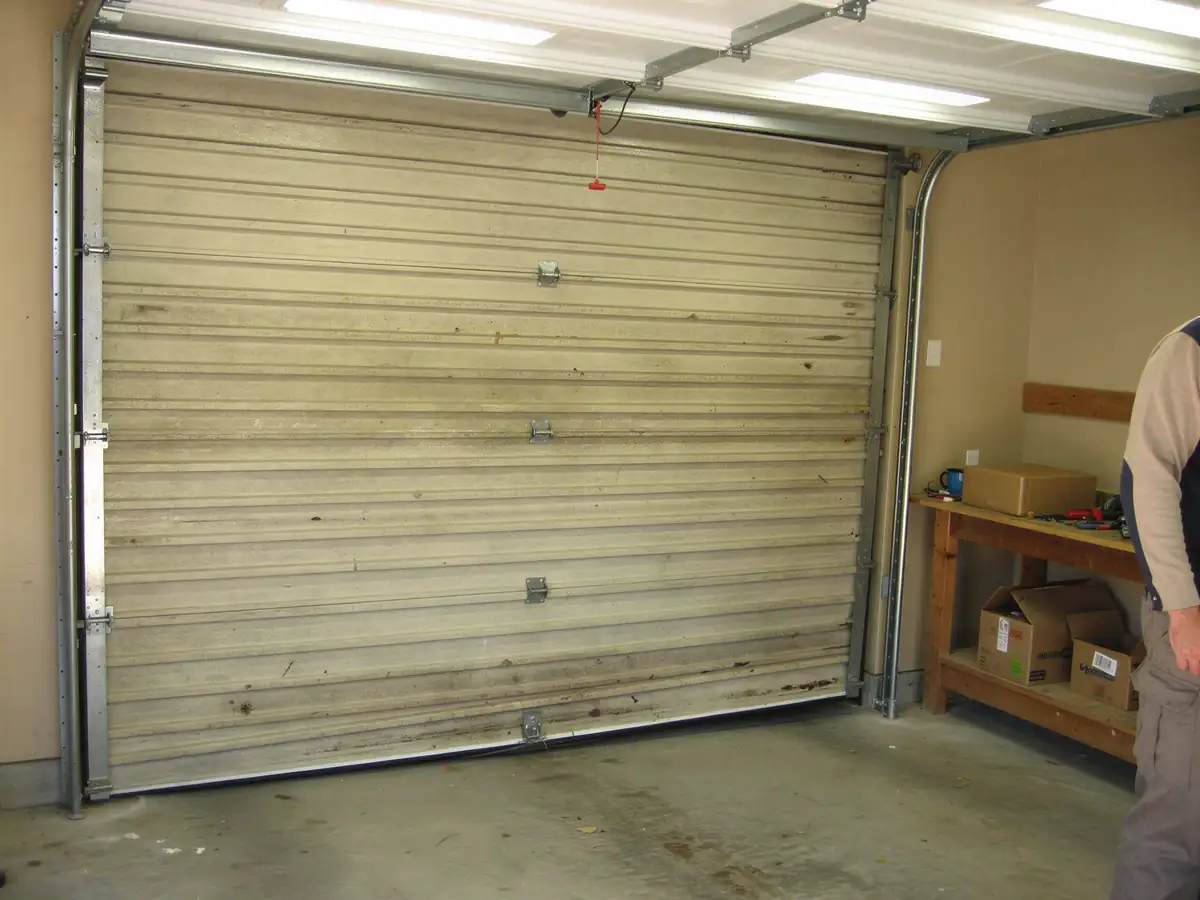
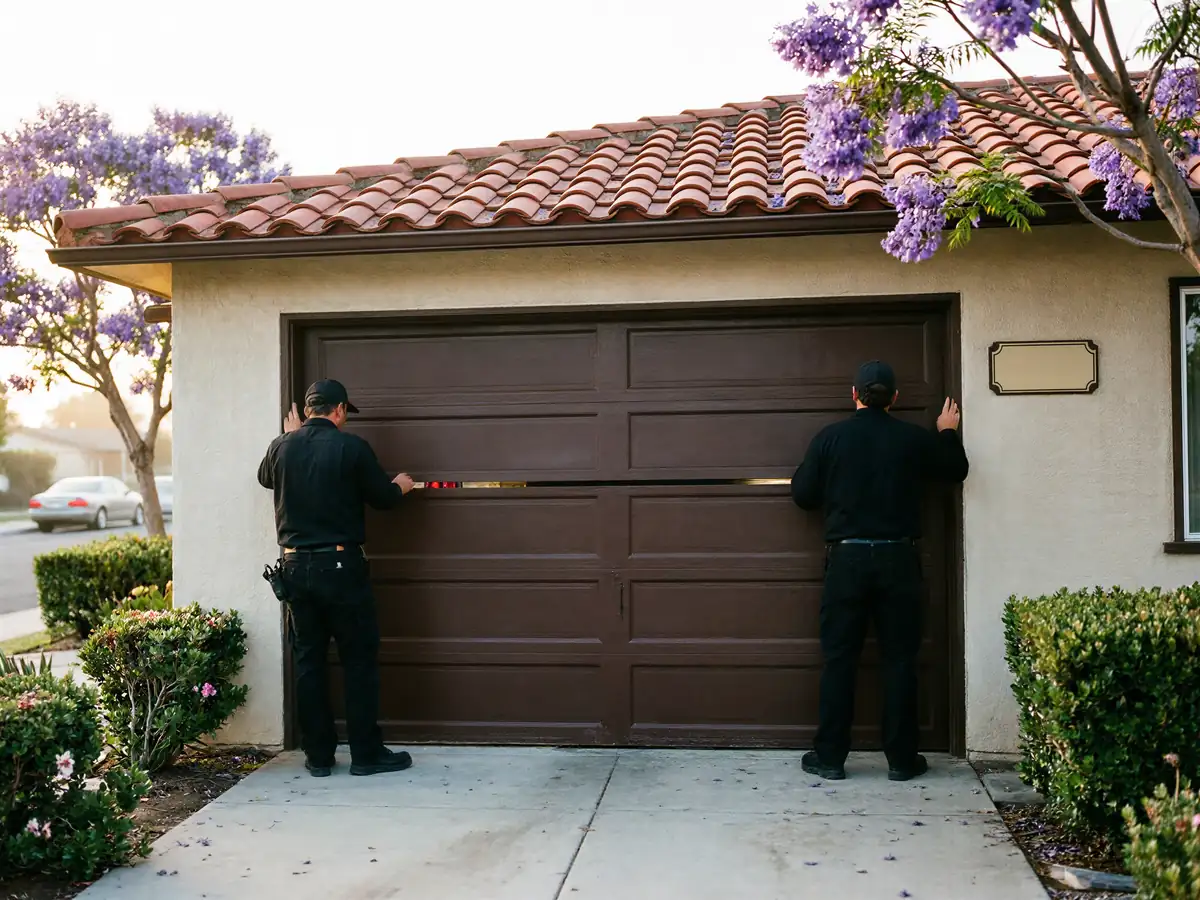
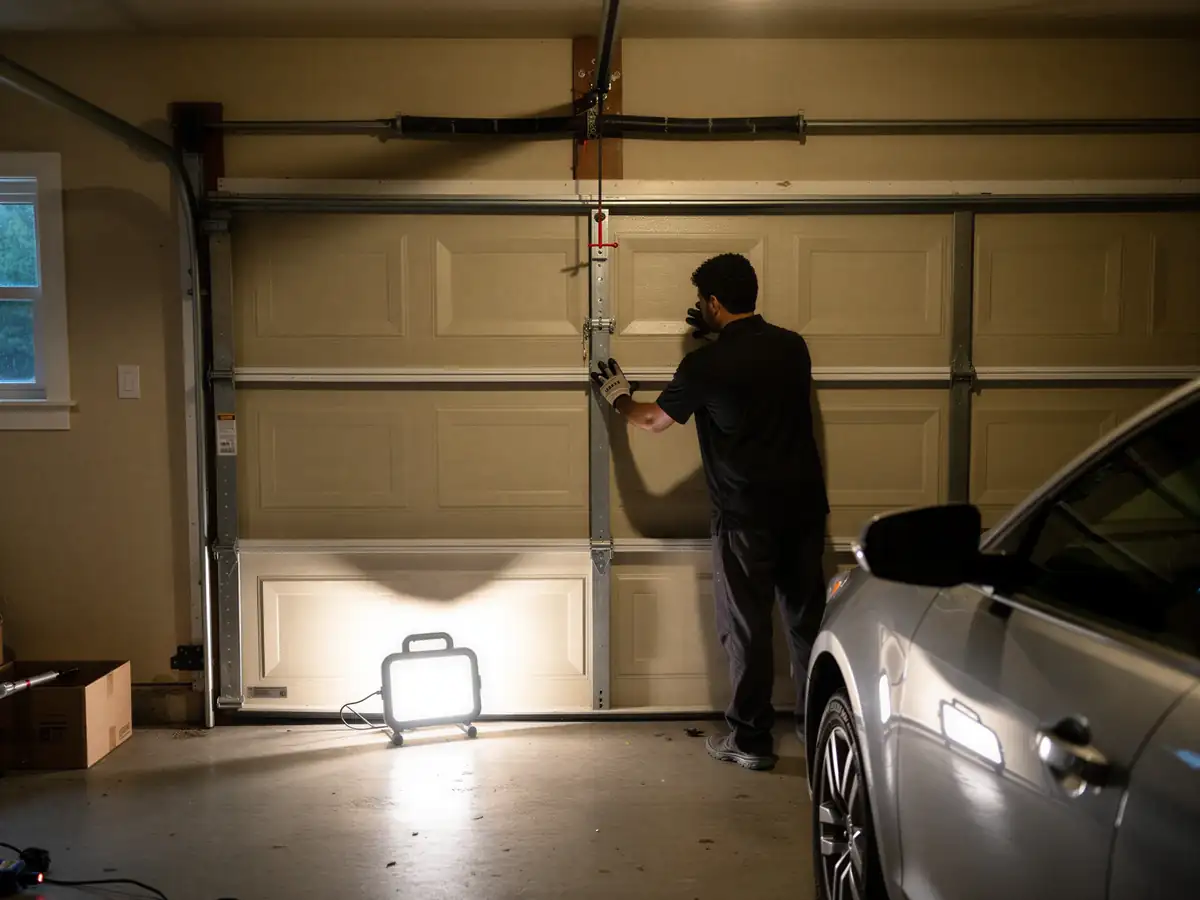
A torsion spring is wound under enough tension to break a bone or worse if it lets go while you're holding a wrench near it. We're not going to walk you through winding one in this article, and any guide that does is leaving out the part where it goes wrong. What you can safely check yourself: whether the door is a torsion-spring door (one thick spring on a bar above the opening) or an extension-spring door (two long springs running along the horizontal tracks on either side). That tells you what parts we're ordering before we even get to the house. You can also check the cables for fraying and note whether the door drops suddenly or just gets heavy to lift by hand - both are useful details to give us on the phone. Lifting the door manually to test it is fine as long as the opener is disconnected first. Past that point - winding bars, unwinding a broken torsion spring, pulling an extension spring off its pulley - leave it. It's not a skill problem, it's a stored-energy problem, and the tools that make it safe aren't things most garages have lying around.
Why It Happens Here
Most of the housing stock across this service area went up between 1938 and 2008, with the bulk of it dating to the 1960s and 70s across the 59 named neighborhoods and nearby towns we cover. That matters for springs specifically: a torsion spring is rated for a cycle count, somewhere around 10,000 open-and-close cycles for a standard residential spring, and a door installed in, say, 1968 has had a lot of decades to burn through that rating even with ordinary use. Original hardware from that era also tends to be undersized for the doors people have since swapped in - heavier insulated panels on springs that were wound for a lighter original door. The mild temperate climate here doesn't add the freeze-thaw stress that cracks springs in colder regions, so when a spring goes in this area it's almost always fatigue from age and cycles, not weather damage. That's actually good news for diagnosis: we're rarely chasing rust-through or ice-jammed track, just a spring that's reached the end of a long service life.
The Symptom
The most common call we get for this is a door that won't budge, or budges an inch and stops, with the opener motor straining and clicking but the door not moving - that's a torsion spring that's lost its wind or snapped clean, and the opener alone doesn't have the strength to lift an unsprung door. On extension-spring setups, the tell is usually one side of the door hanging lower than the other, because one spring is still holding its side and the other has let go. You might also hear a loud bang from the garage, often mistaken for something falling or a car backfiring outside - that's the spring breaking, not the door failing more broadly. A door that's merely noisy, slow, or hard to lift but still moves under its own weight is more often a worn roller, a dirty track, or a cable starting to fray, not a spring. We sort that out on the call before a truck gets dispatched, so you're not paying for a spring diagnosis when the actual problem is something smaller.
What You Pay
We price spring repair based on what's actually wrong: whether it's one torsion spring or two, whether it's a torsion or extension system, and whether anything else failed alongside the spring - a cable snapping under the sudden load is common, and a bent track from a door that dropped unevenly happens too. We don't quote a flat number over the phone before seeing the door, because a single-spring torsion job and a double-spring job with a damaged cable aren't the same repair, and guessing low and changing the price at the house is how trust gets broken. What we can tell you up front is that spring replacement is one of the more affordable garage door repairs there is - it's a contained, well-understood job, not a structural one. If a spring has failed and taken out a track or badly stressed the opener's gears, we'll say so plainly rather than quietly swapping the spring and leaving the rest for you to discover later.
How it works
From “it’s stuck” to “it’s fixed”
01
Tell us what’s wrong
Describe the symptom - won’t open, loud bang, opener runs but the door won’t move.
02
On-site diagnosis
A technician tests the door under power and by hand and finds what actually failed.
03
Clear, up-front plan
You get the fix that’s needed and what drives the cost - before any work starts.
04
Repaired & tested
The repair is done, the door is set true and tested, and the work area left clean.
Not sure which repair your door needs in Oakland, CA? Describe what it’s doing - every job starts with a diagnosis.
Straight answers about garage door repair in Oakland. Still unsure? Ask us directly.
How long does a spring repair take once you're at the house?
A straightforward single or double torsion spring swap is usually a same-visit job once the truck is there with the right parts. If the spring took out a cable or bent a track on the way down, that adds time on site since we're replacing more than one part. We'll tell you what we're looking at before starting, not after.
Why did my spring break with no warning?
Springs fail from accumulated cycles, not from one bad day. A spring wound for an older, lighter door or one that's simply logged tens of thousands of open-close cycles since it went in decades ago is working toward failure the whole time - the actual break just looks sudden because nothing visibly wears down until it lets go.
Is it ever better to replace the whole door instead of just the spring?
Rarely for the spring alone - that's a contained repair. It becomes a different conversation if the spring failure bent the track badly, cracked an aging panel, or if the door itself is near the end of its life for other reasons. We'll flag that honestly rather than sink repair cost into a door that's done.