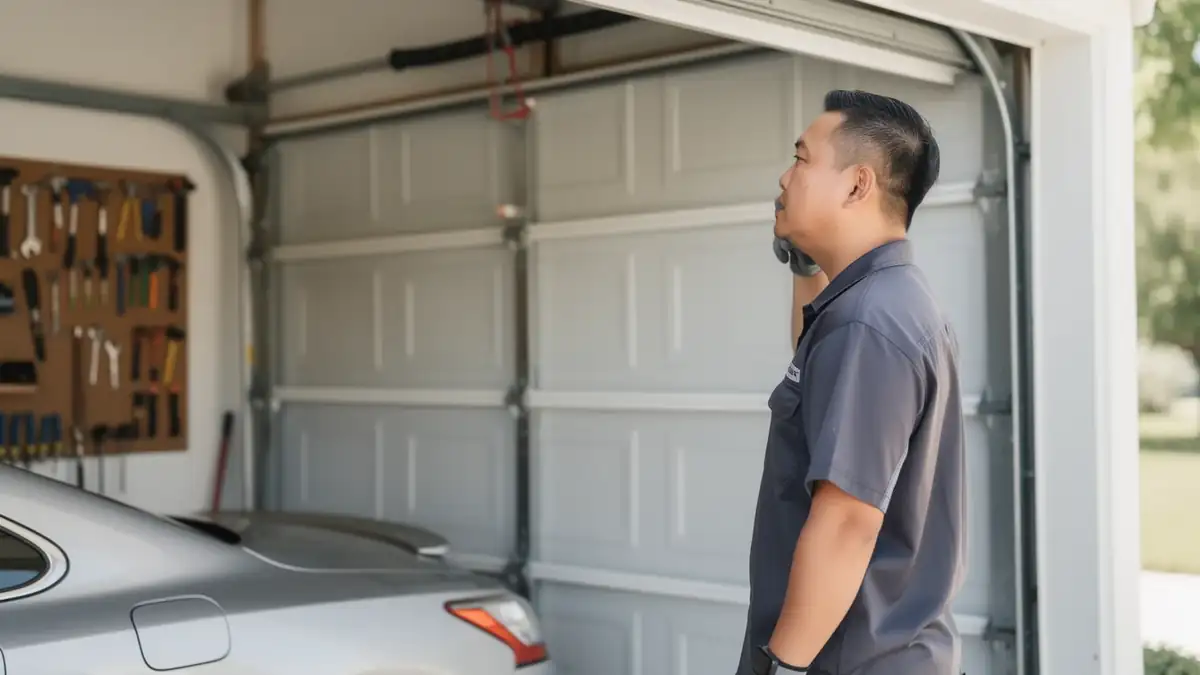
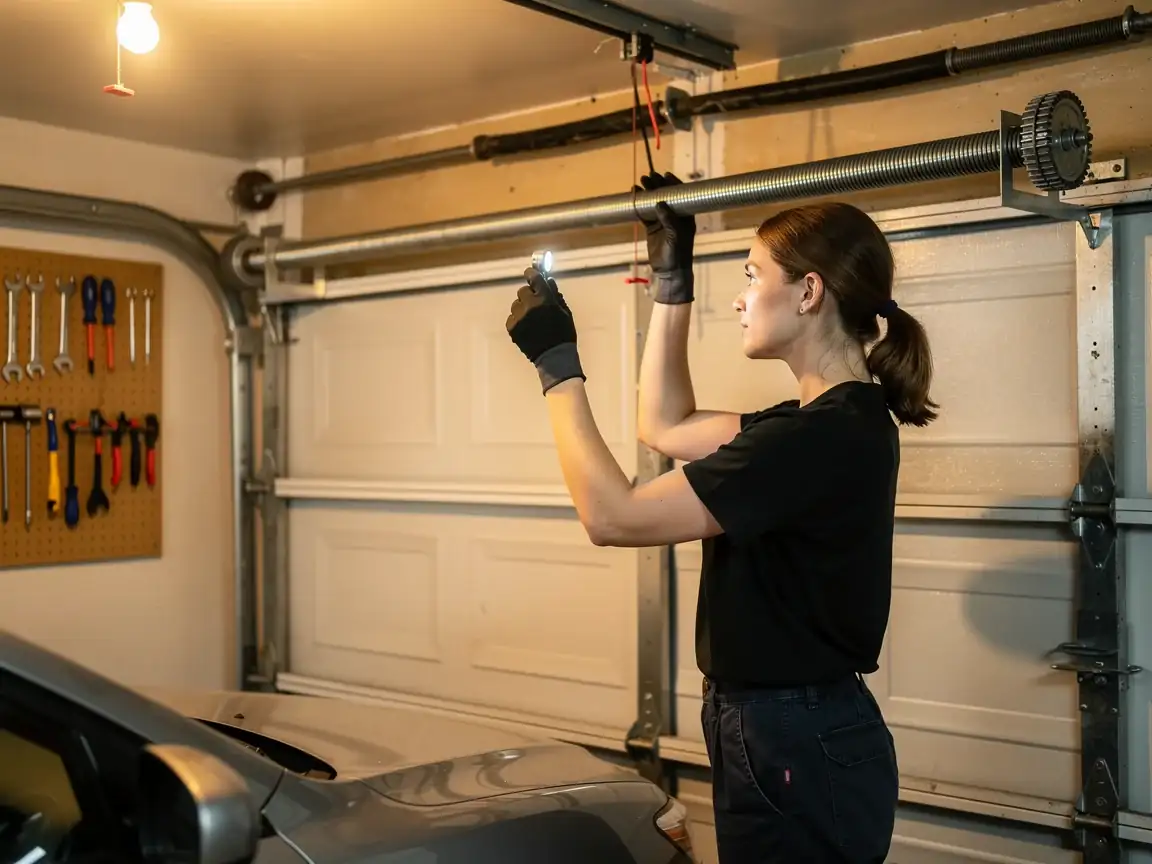
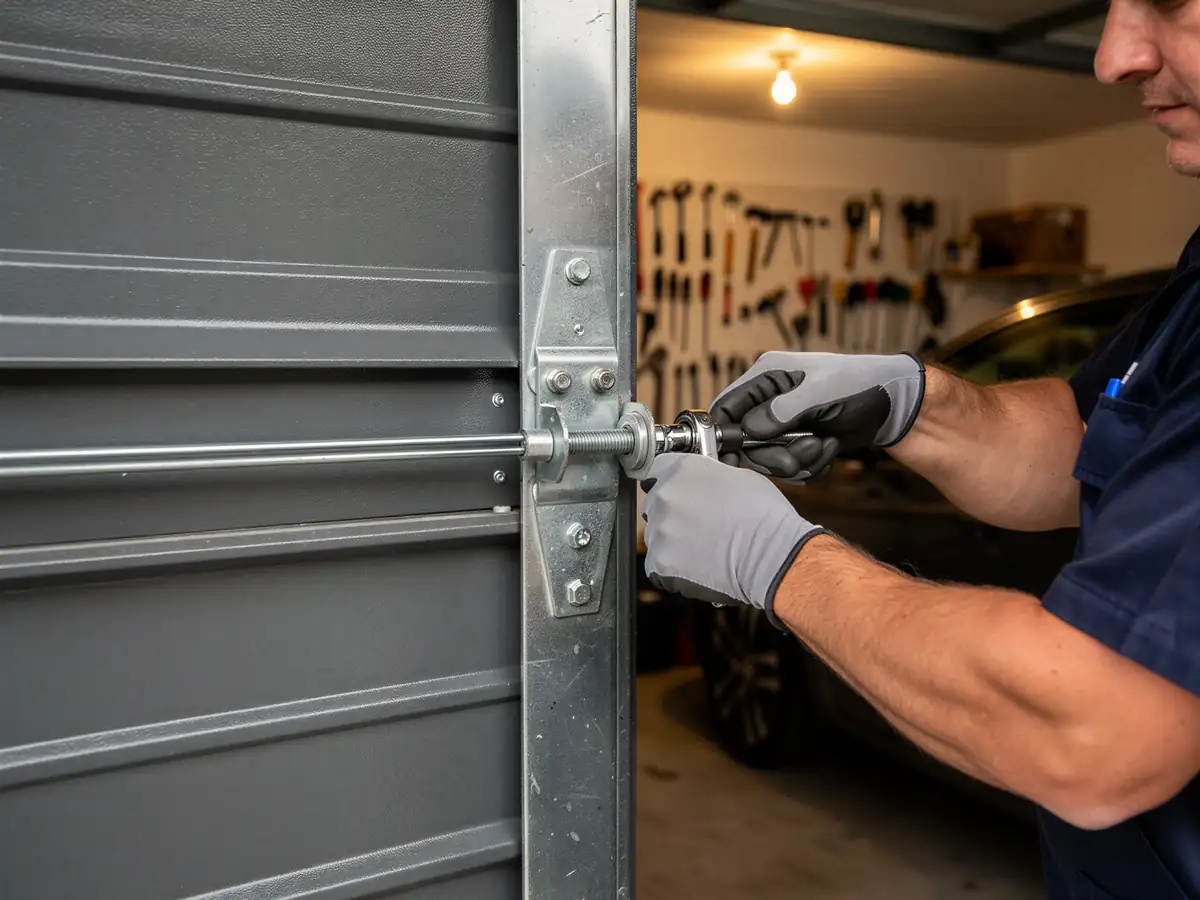
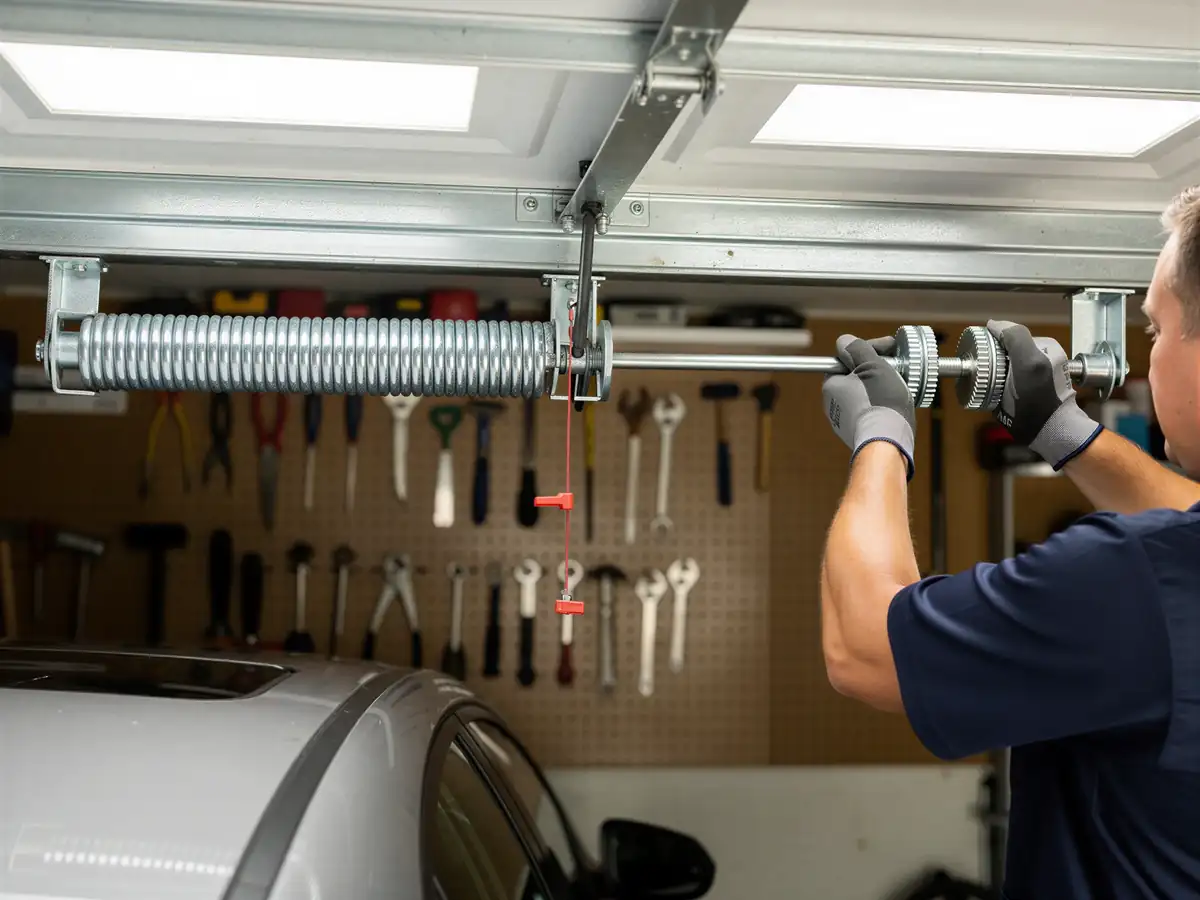
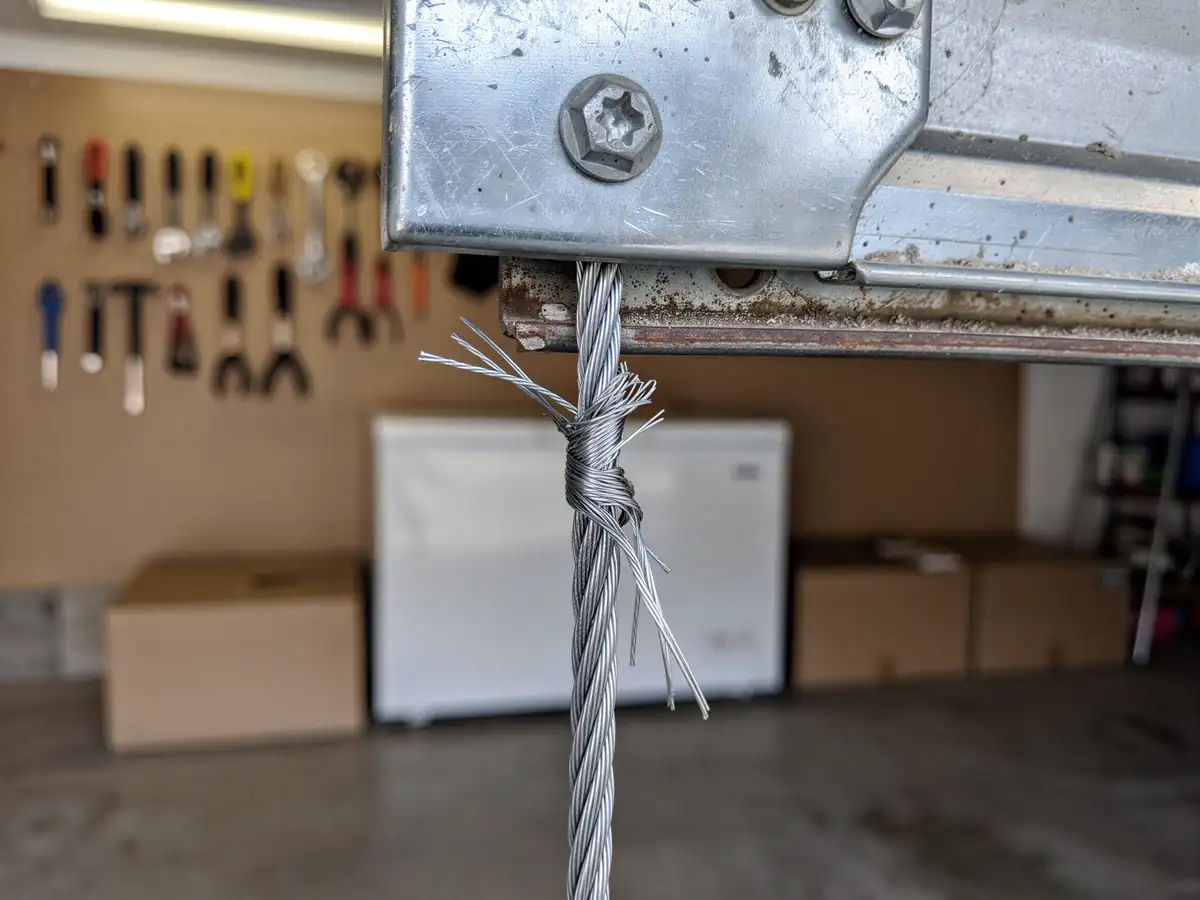
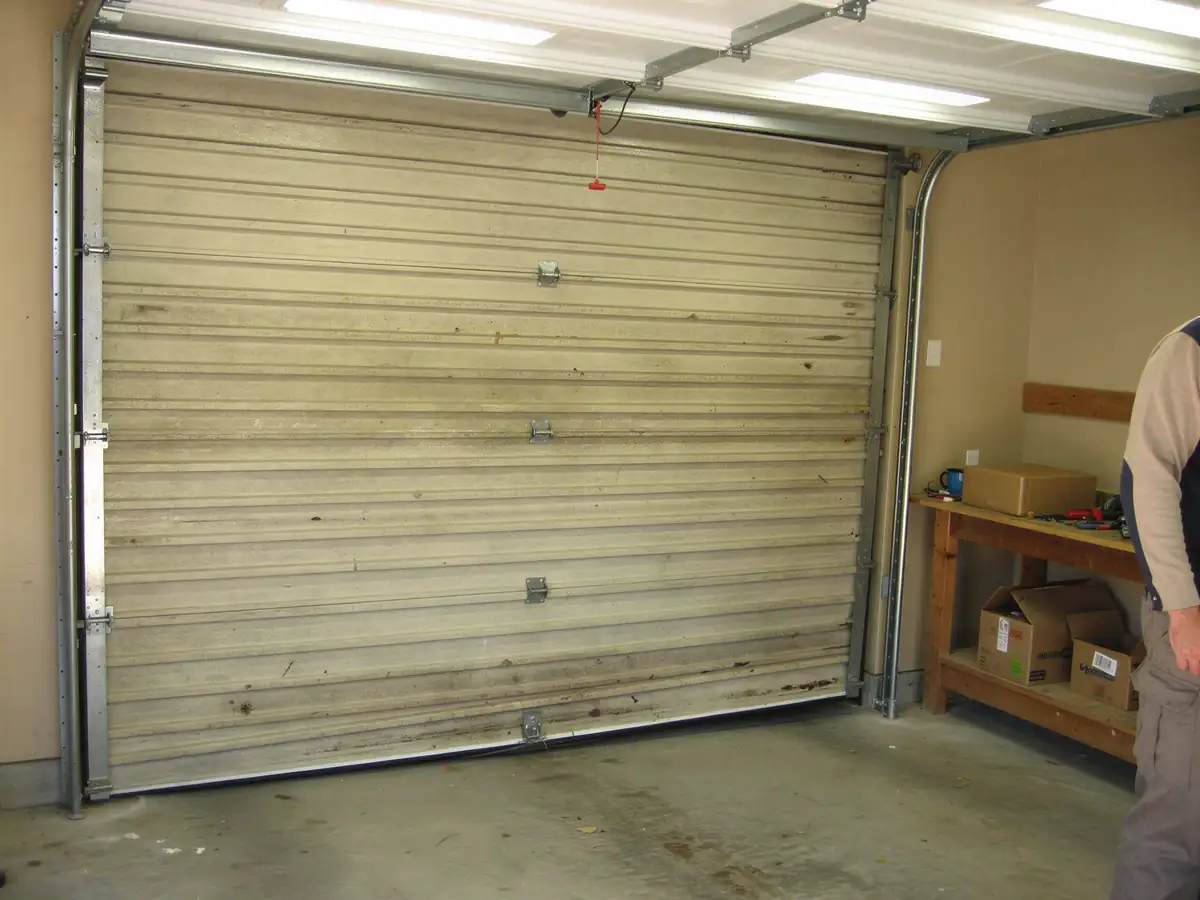
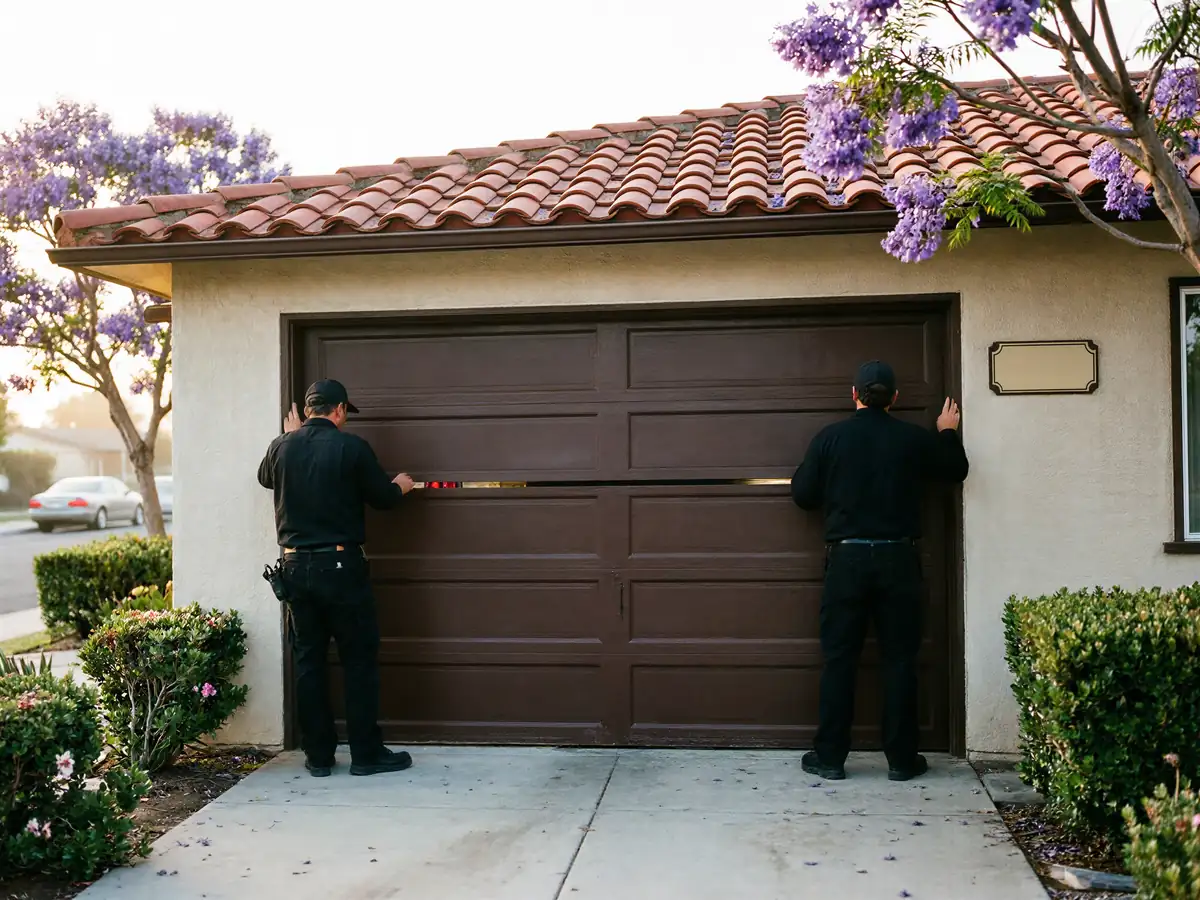
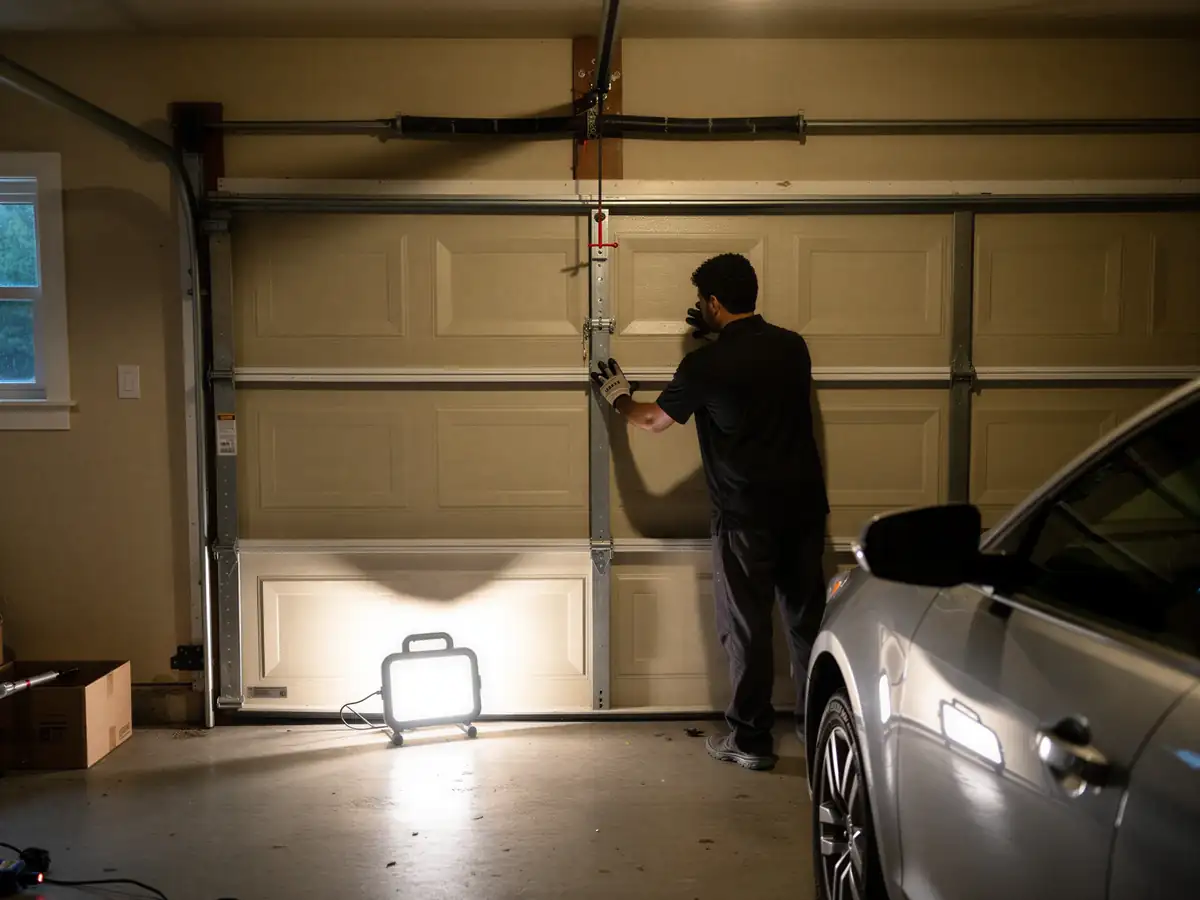
Most of the calls we get start the same way: a grinding, a clunk, a rhythmic squeal that wasn't there last month. In a city where housing runs from 1938 to 2008 with a median build year around 1965, the noise usually traces back to original hardware that's outlived the rollers it came with. A door in built during that mid-century wave likely still has its first torsion spring, or a replacement installed decades ago by whoever owned the house before. The grinding you hear from the track is often galvanized rollers that have gone dry and started wearing flat on one side - that sound gets worse, not better, and it doesn't fix itself. A rattle on close usually means loose hinges between panels, common on doors from that era because the steel gauge was lighter than what's installed today. We can't tell you which it is over the phone. We can tell you that ignoring a new noise on a door this old is how a $200 roller job turns into a cable snap that bends the track on its way down.
What You Pay
We're not going to list prices here that don't match what you'd actually be quoted - every door's noise points to a different repair, and the honest answer is we need to look at the spring size, the roller type, and the track alignment before we can say a number. What we can tell you is what drives the cost up or down: a worn roller is a small job, a broken torsion spring on a door that's original to a 1960s build is a bigger one because the hardware mounting often needs updating to match current springs. If your opener motor is the thing making noise - not the door itself - that's usually a separate conversation, since gear and sprocket wear is a different fix than anything involving the door panels or track. Ask for a breakdown before the work starts, not after.
What Changes With the Season
Oakland's climate band sits in the mild temperate range, which is a break compared to places that see hard freezes - you won't get a spring snapping from cold-contracted steel the way homeowners further inland sometimes do. But mild doesn't mean static. The swing between summer dry heat and the damp stretch of the rest of the year still moves wood-paneled doors, common on older stock in neighborhoods like enough to change how they seat against the weather strip. That seasonal flex is usually what turns a quiet door into one that groans on the first cold morning after a dry stretch - the wood's reabsorbing moisture and the panel's binding slightly against the track it fit fine in August.
What the Weather Here Does to It
A mild temperate climate is gentler on garage door hardware than most of the country gets, and that's real - you're not fighting the freeze-thaw cycle that cracks torsion springs in colder regions. The tradeoff is slow, steady moisture rather than dramatic swings, and that favors corrosion over sudden failure. Tracks and cables on houses built in that 1938-to-2008 range, especially the untouched originals from the 1960s and 70s wave that makes up most of the stock here, tend to show surface rust at the mounting brackets before anything else goes wrong. That rust is usually what you're hearing as a scrape rather than a squeal - metal dragging against metal that's gone slightly rough. It's a maintenance item, not an emergency, if you catch it before it eats through the galvanizing.
How it works
From “it’s stuck” to “it’s fixed”
01
Tell us what’s wrong
Describe the symptom - won’t open, loud bang, opener runs but the door won’t move.
02
On-site diagnosis
A technician tests the door under power and by hand and finds what actually failed.
03
Clear, up-front plan
You get the fix that’s needed and what drives the cost - before any work starts.
04
Repaired & tested
The repair is done, the door is set true and tested, and the work area left clean.
Not sure which repair your door needs in Oakland, CA? Describe what it’s doing - every job starts with a diagnosis.
Straight answers about garage door repair in Oakland. Still unsure? Ask us directly.
My garage door squeals every time it opens - is that the spring?
Not usually. A squeal is almost always dry rollers or hinges, not the spring - a spring failing tends to sound like a loud bang, not a squeal. On older Oakland homes with original 1960s-70s hardware, dry rollers are the most common cause we find.
Why does my door only make noise in certain weather?
Wood panel doors common in older Oakland neighborhoods expand and contract with humidity swings through our mild temperate climate. When the wood's recently reabsorbed moisture after a dry stretch, it can bind slightly against the track and groan on the first few openings.
Is a grinding noise from the track dangerous?
It can become one. Grinding usually means a roller has worn unevenly and is riding rough in the track. Left alone, that wear can pull the roller out of alignment and put extra strain on the cable, which is a bigger and more dangerous failure than the roller itself.
How do I know if it's the opener and not the door?
If the noise happens only when the motor runs, even with the door disengaged from the opener arm, it's the opener's gears or sprocket, not the door hardware. That's a different repair than anything involving springs, rollers, or track.