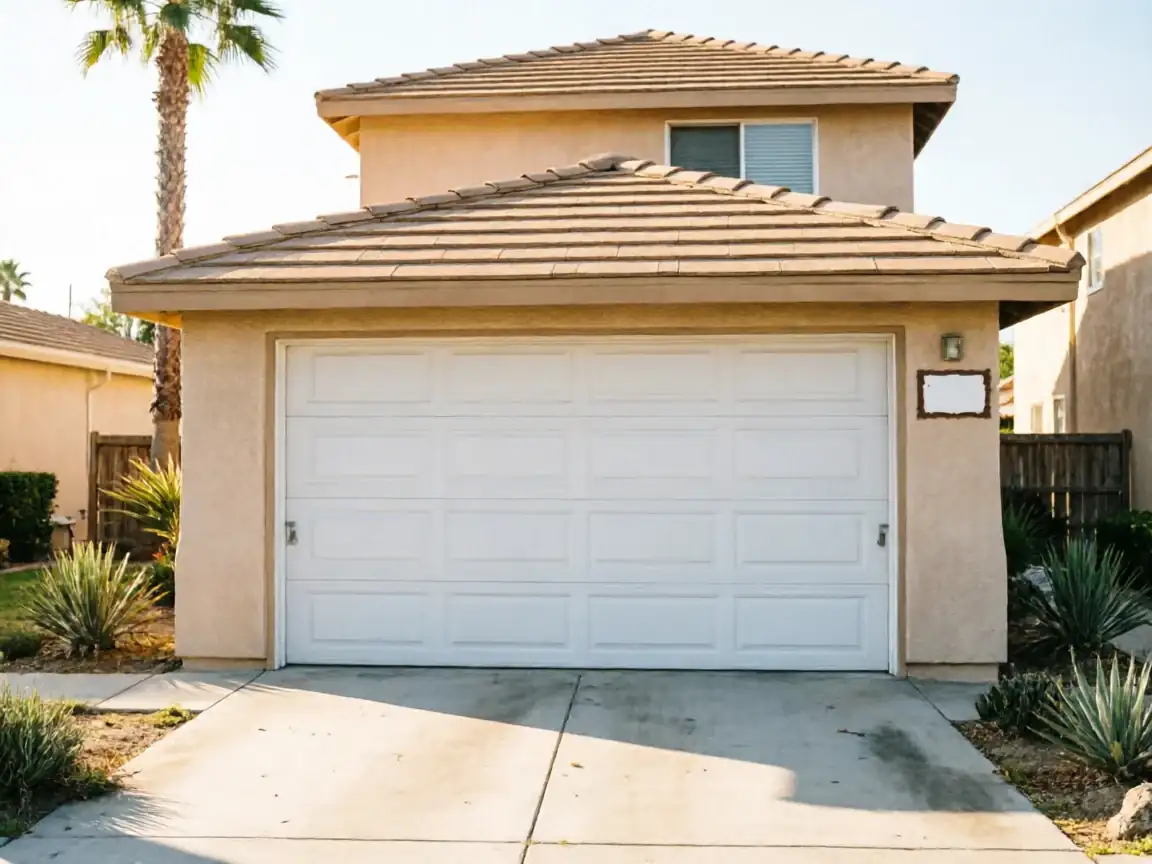
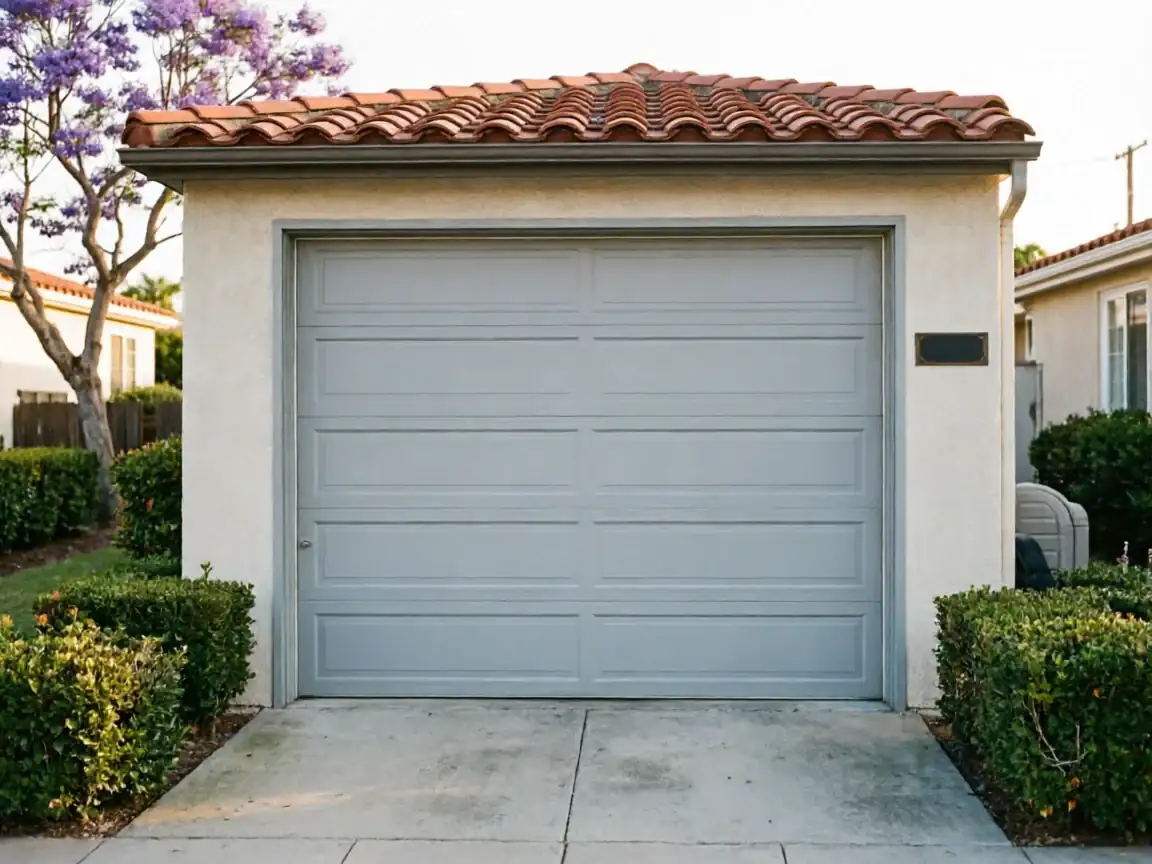
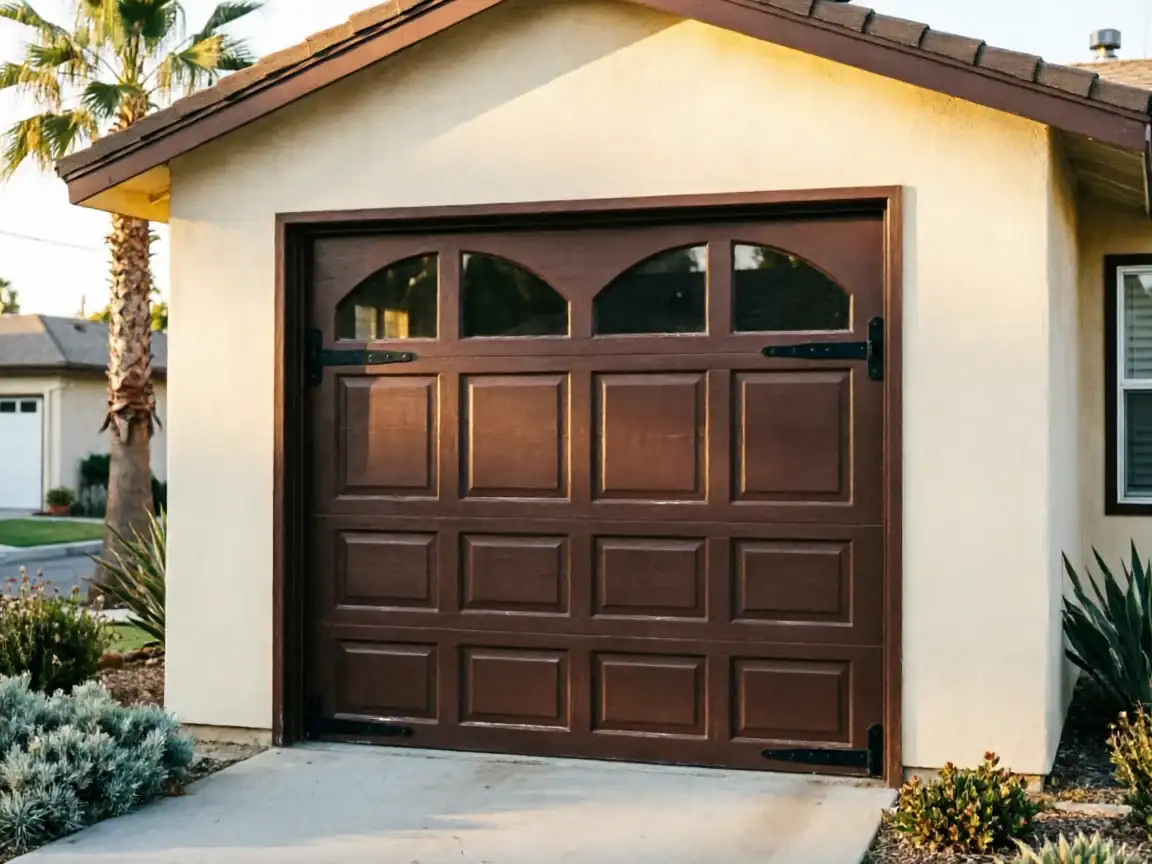
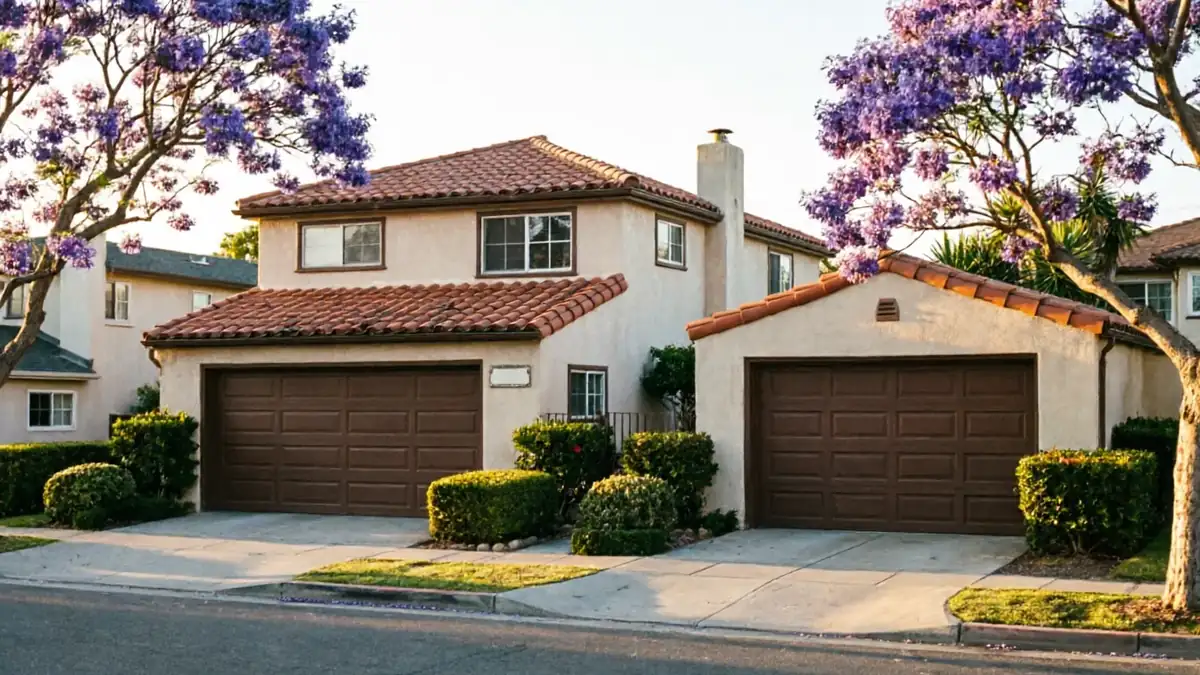
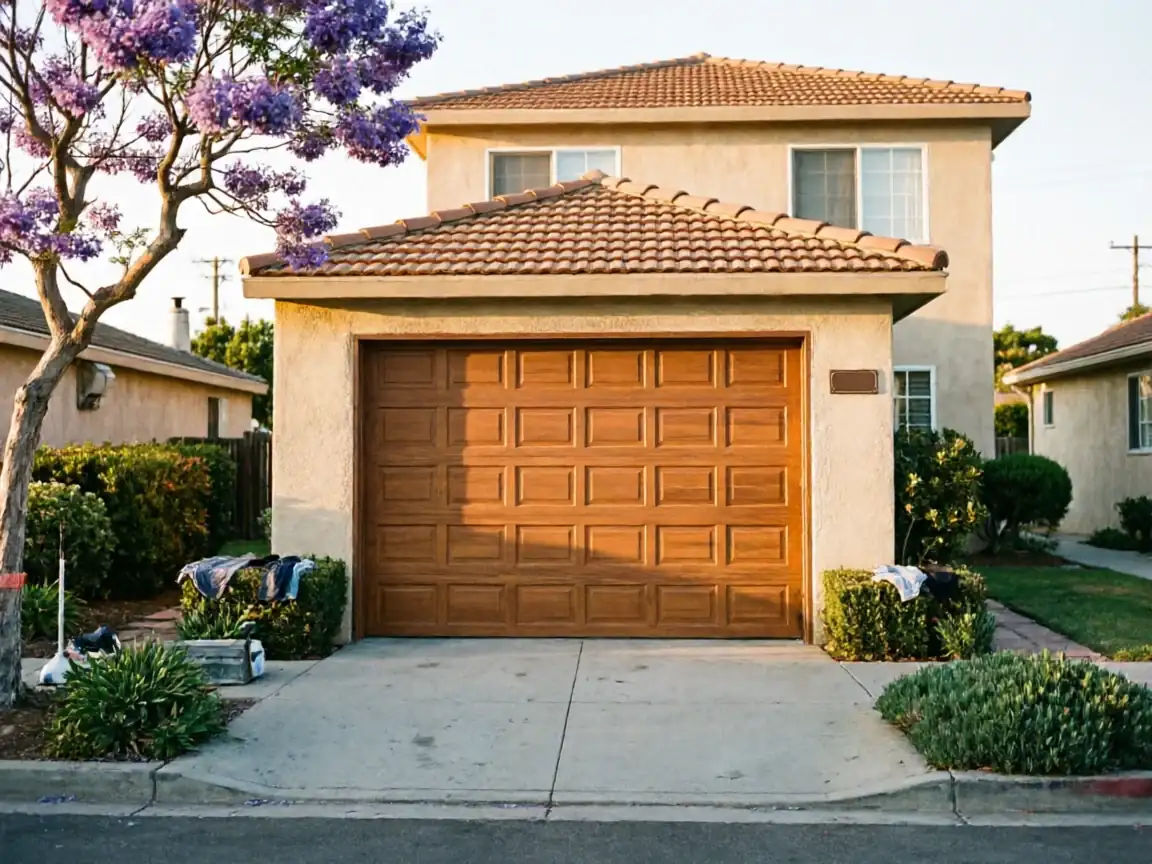
Albany homes mostly went up around 1951, years before Oakland's median 1965 stock. We replace mismatched or dented panels on that older hardware, traveling the 10 miles from our Oakland shop.
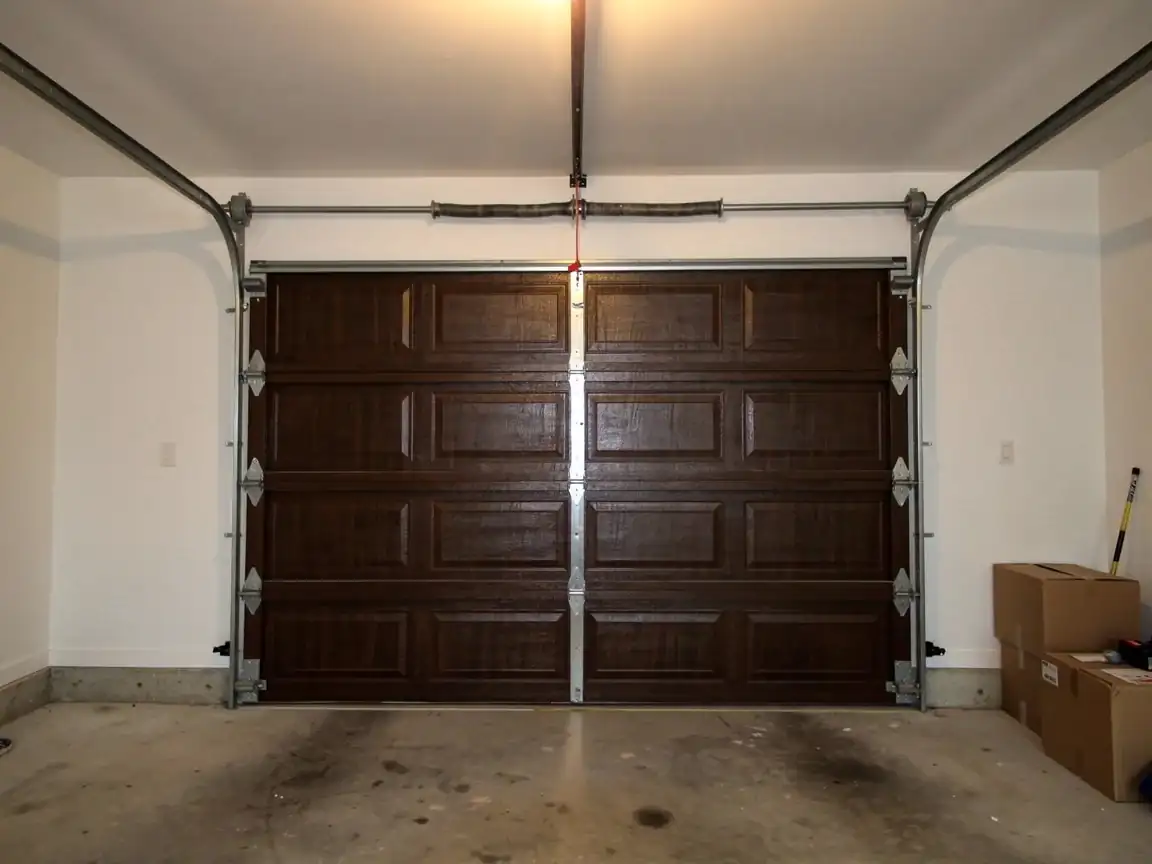
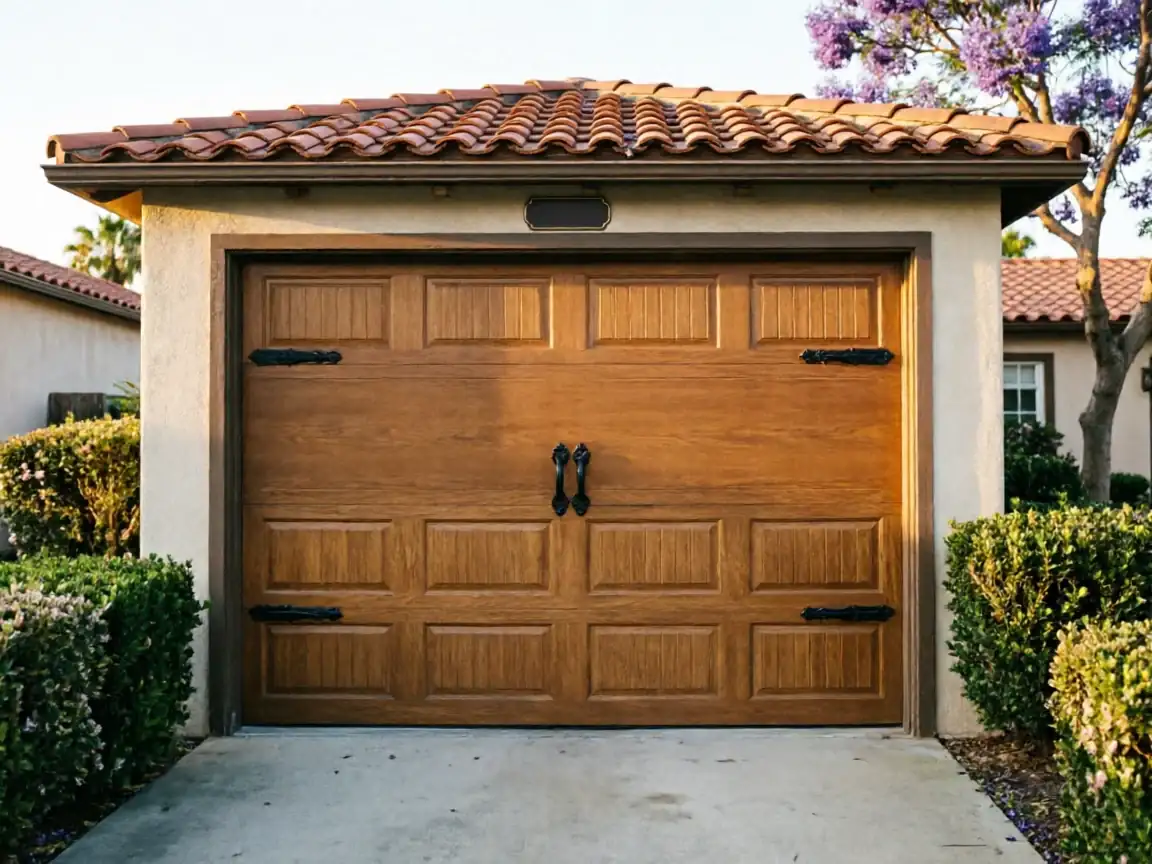
Albany's housing stock centers on 1951, a good fourteen years earlier than the median across the wider service area. That matters for panels because doors installed or replaced on houses from that build year tend to run narrower rail widths and heavier gauge steel than what you'll find on anything built in the 1970s. A lot of these original sections were flat-panel steel or early embossed steel made to look like wood, hung on track hardware sized for a lighter door than what often got added on top later - storm bracing, insulation retrofits, a heavier opener bolted to a bottom rail it was never sized for. When one section on a door like that gets dented or starts to buckle, the replacement isn't always a catalog match. We've seen doors in this town where the section depth or the hinge spacing is just far enough off from today's standard that a universal panel won't seat right without reworking the track. That's a different job than popping in a same-era panel on a house built in 1965, and it's worth knowing going in.
The Symptom
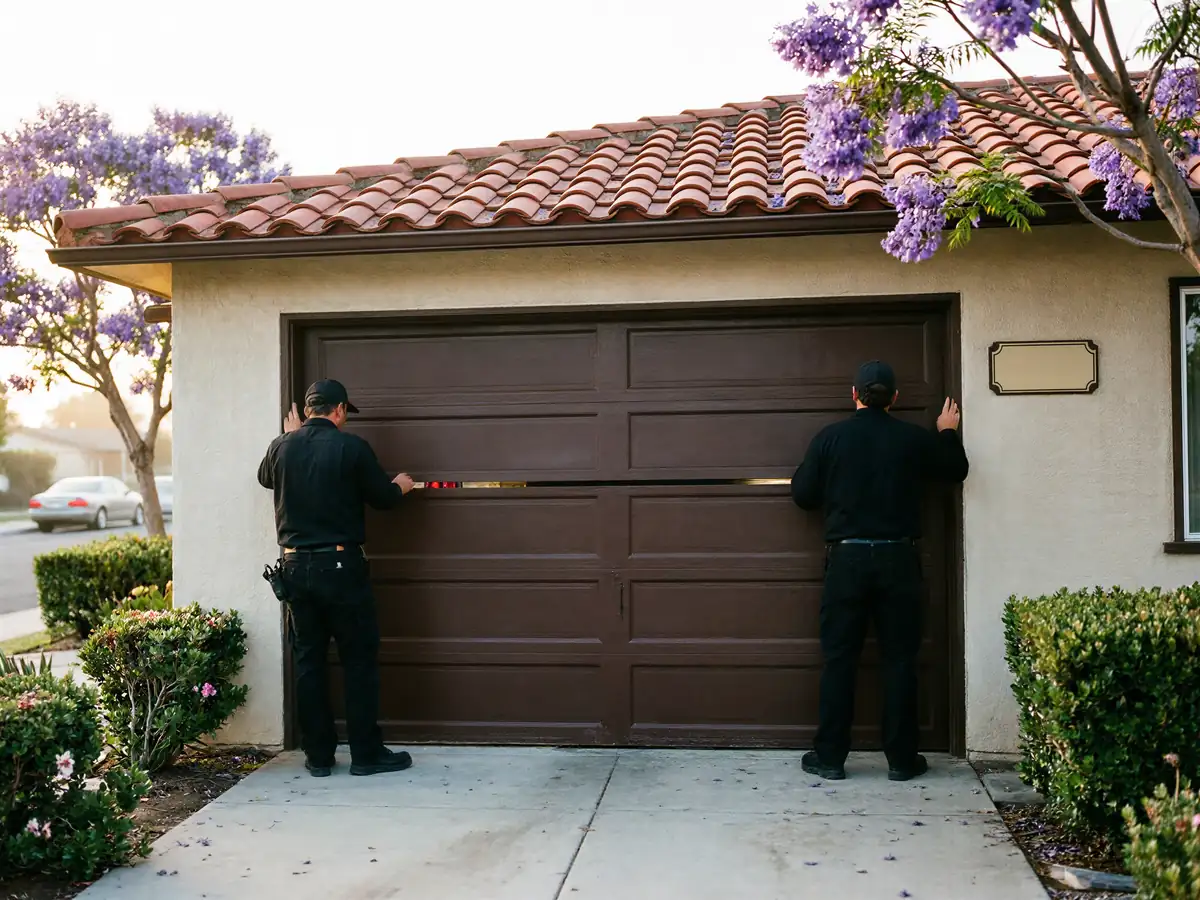
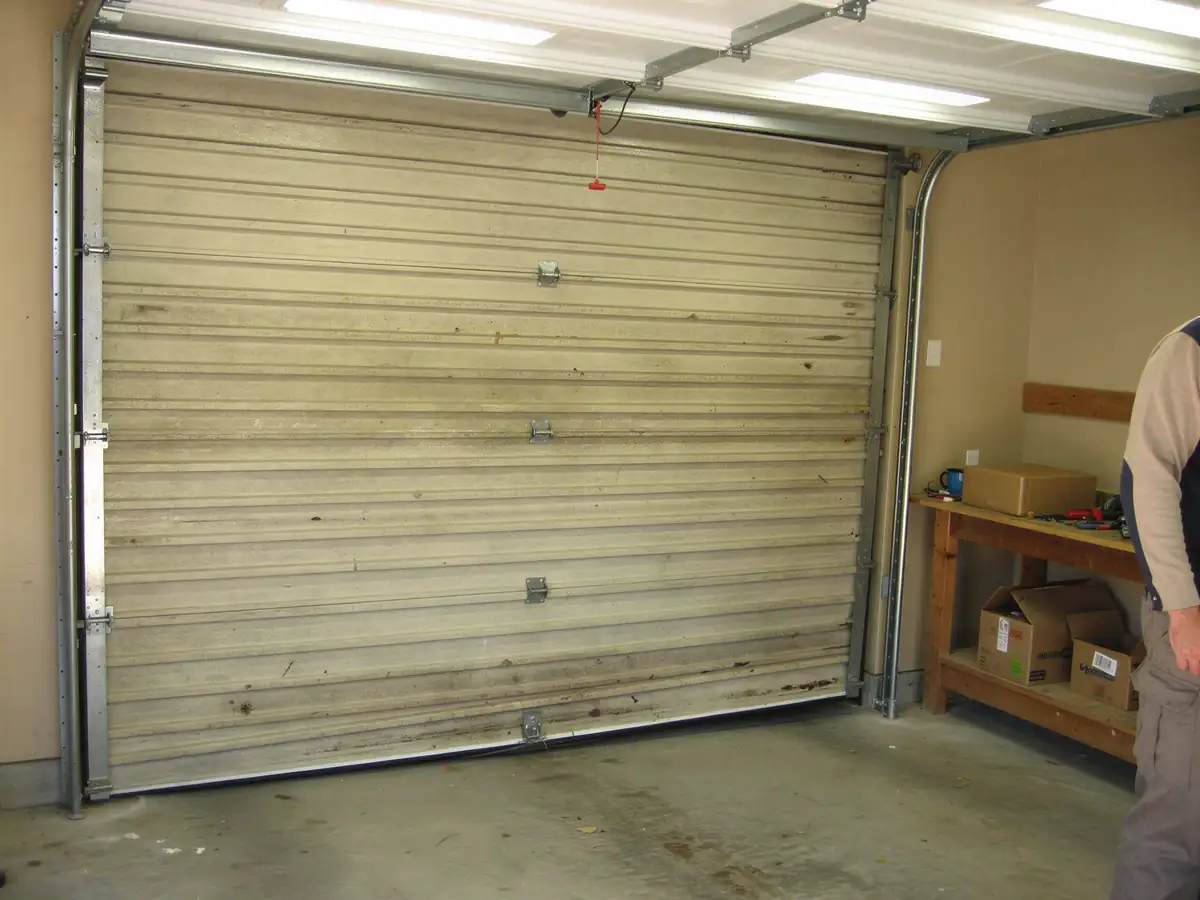
The most common call we get from this part of town is a single bottom or second-from-bottom panel that's dented inward, cracked at a seam, or bowed enough that the door doesn't sit flush in the track anymore. On the older steel common to 1951-era construction, a dent from a car bumper or a stuck bike doesn't just dimple the surface - it can distort the panel's edge enough to bind the rollers, which shows up as grinding or a door that stutters partway up. You'll sometimes also see rust starting at the bottom edge of a panel, not from weather extremes (the climate here stays mild through the year) but from years of ground moisture wicking up into seams that were never sealed to modern standards. If the damage is on a middle panel and the door still tracks straight, that's usually a cleaner fix than bottom-panel damage, which almost always involves the whole bottom section and sometimes the astragal seal with it.
What the Repair Takes
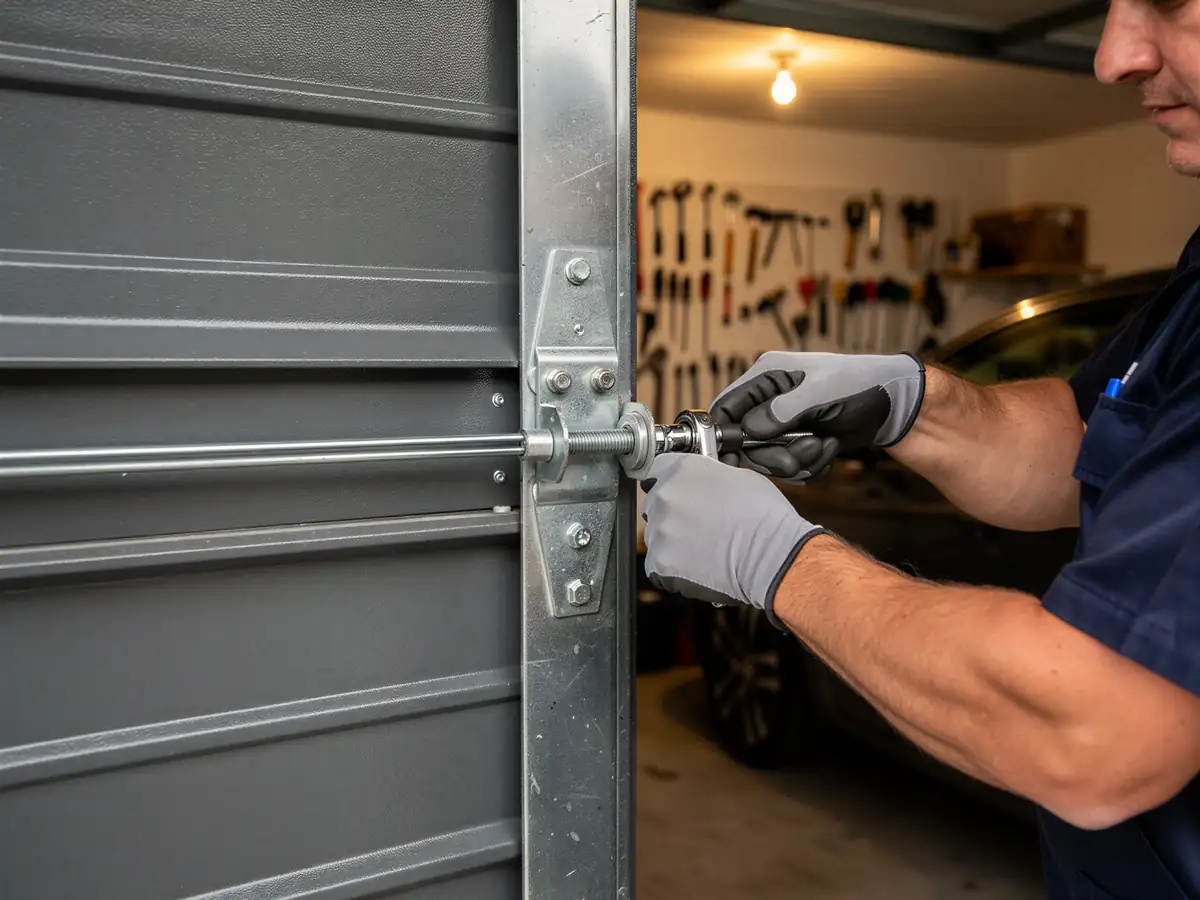
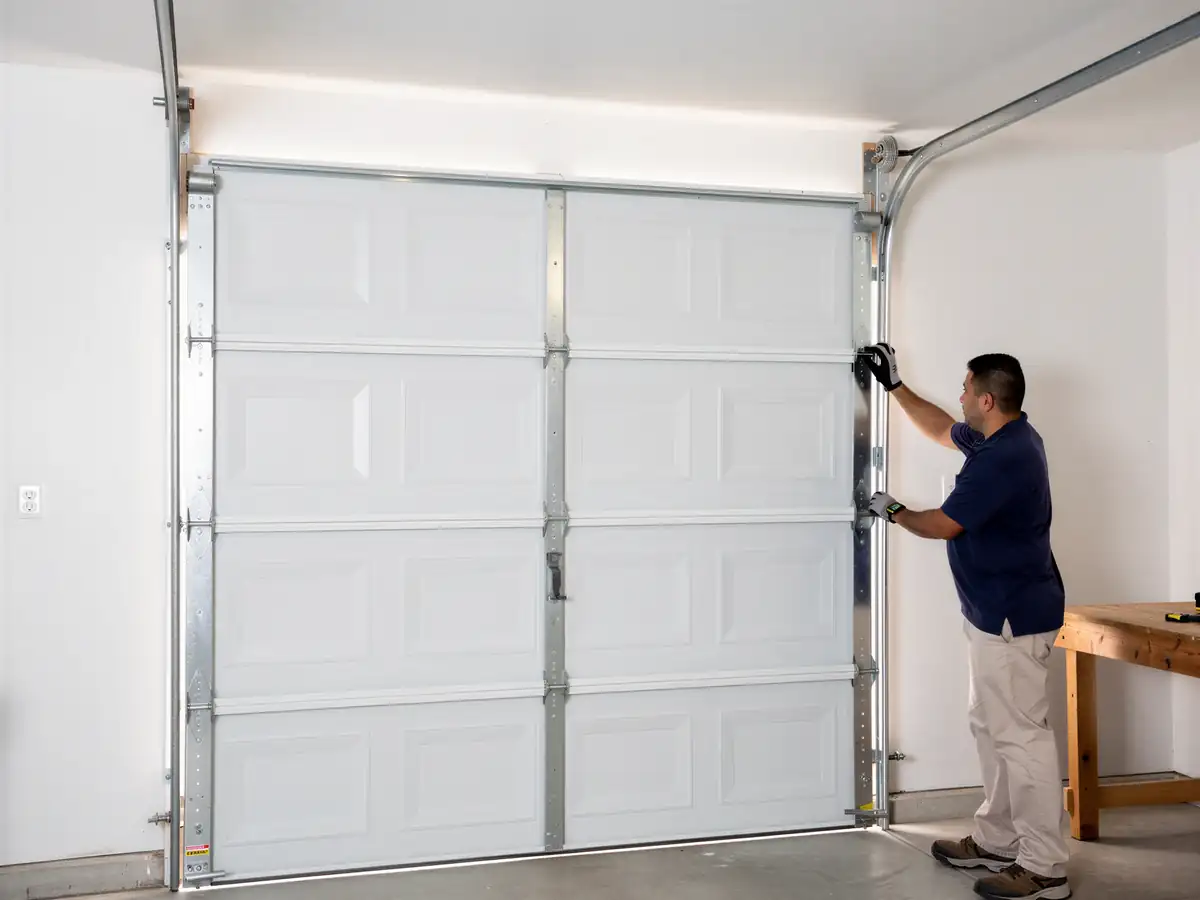
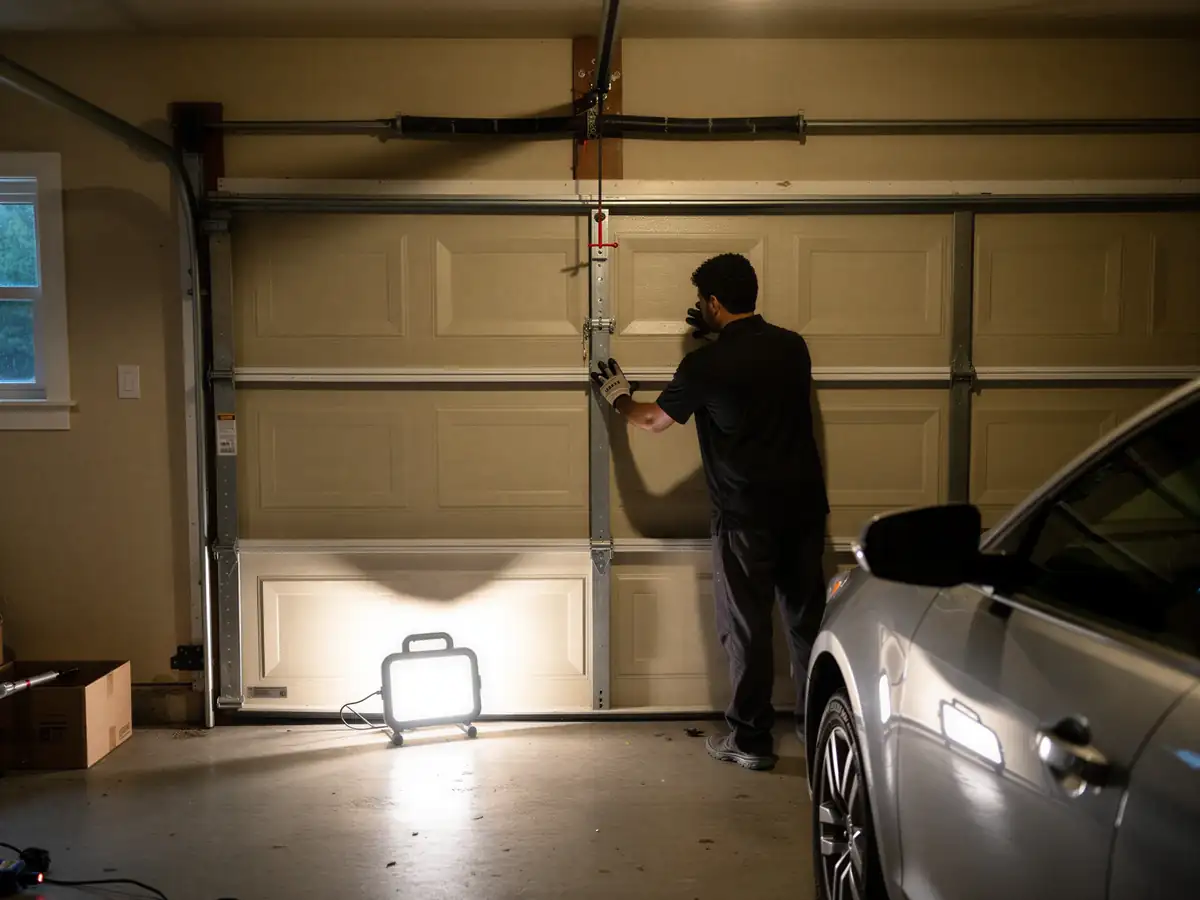
First step is measuring the actual section - height, width, and hinge spacing - against what's currently manufactured, because a door original to a 1951 build may not match a current-production panel without an adapter or a full hinge swap on that section. If a matching profile exists, we pull the damaged section, transfer the hardware (rollers, hinges, cable drums if it's a bottom panel), and set the new section in without disturbing the rest of the door's balance. If the door's track or spring tension has shifted to compensate for the damaged section - which happens more than people expect on older hardware - we adjust that as part of the same visit rather than leaving it to re-fail in a month. One honest limitation: if the original panel profile is no longer made and no close match exists, patching one section stops making sense, and full door replacement becomes the better dollar for dollar option. We'll tell you straight if that's where your door is instead of selling a mismatched fix.
Can You Do This Yourself
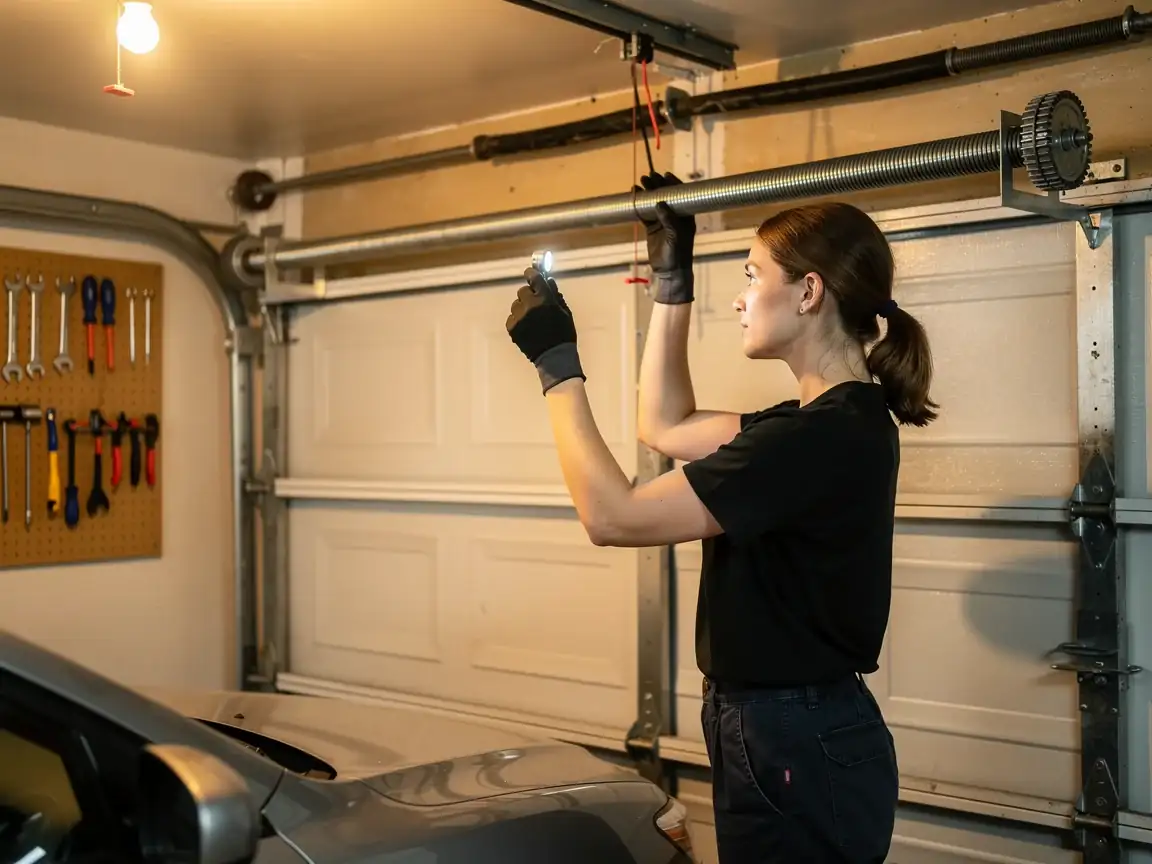
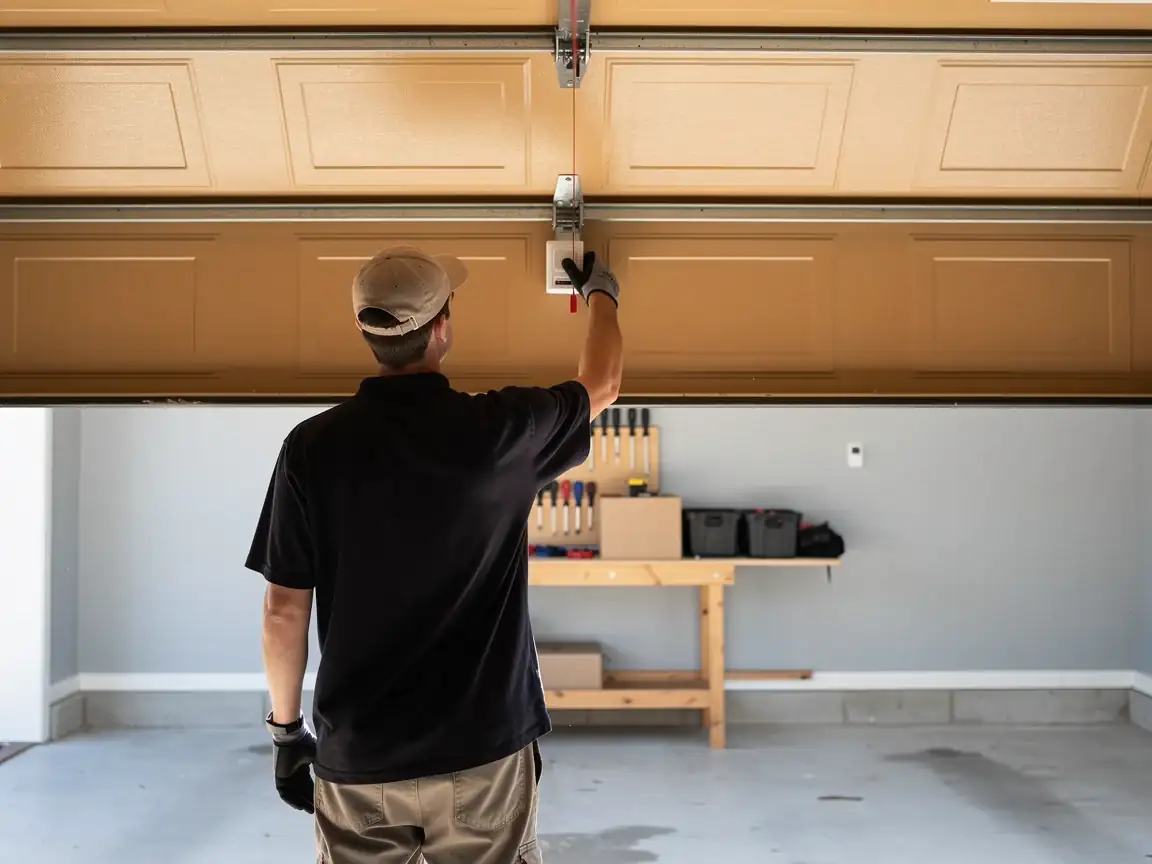
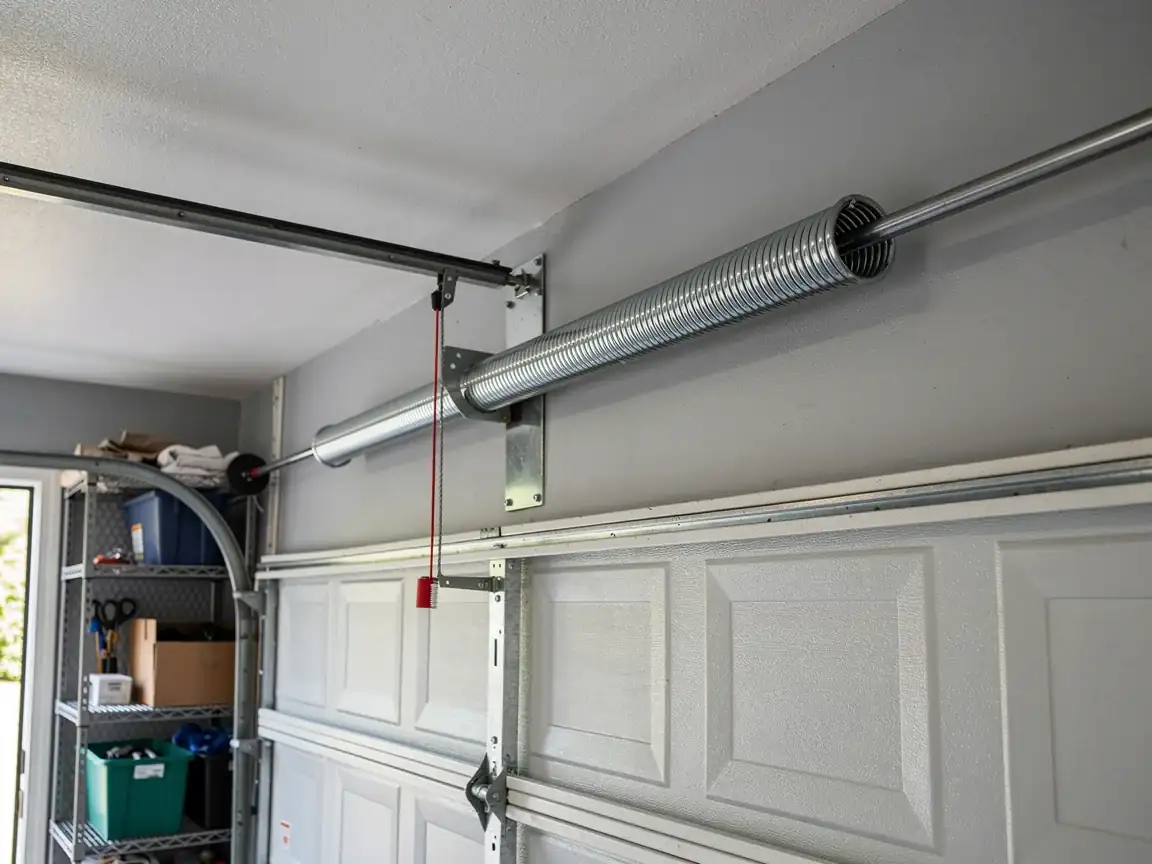
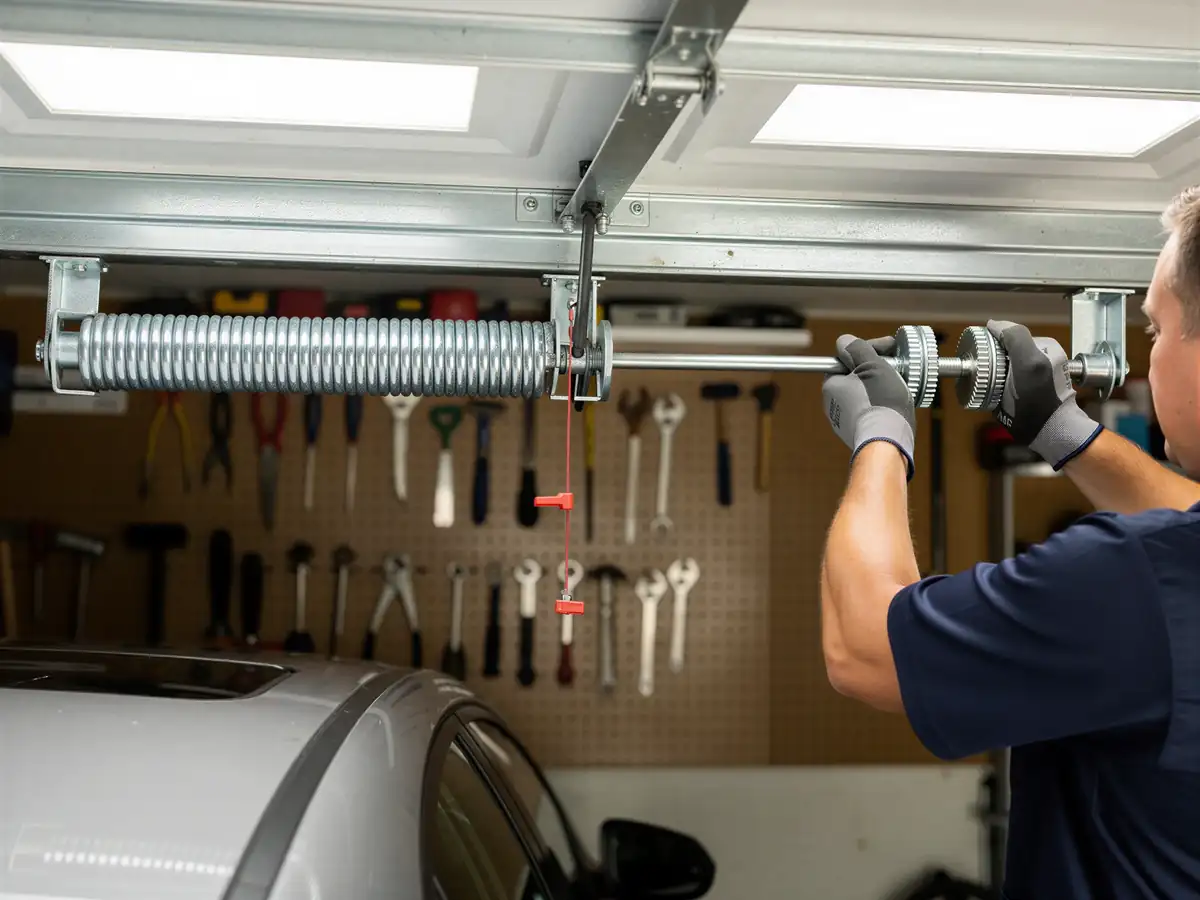
Swapping a single garage door panel looks simple from a video, and on some newer doors it nearly is. On the hardware common to Albany's older housing stock, it's a harder job than it looks because the section is often carrying tension from a torsion spring sized for the original door weight, and pulling the wrong panel first can let the whole door shift or drop. If you're comfortable disconnecting the opener, supporting the door securely, and you've already confirmed the new panel is an exact match for hinge spacing and section height, a middle-panel swap on a balanced door is within reach for someone handy. We don't recommend it on a bottom panel, on any door where the spring tension already seems off, or on a door where you're not sure the replacement panel actually matches - that's where a ten-minute job turns into a damaged track or a dropped door.
How it works
From “it’s stuck” to “it’s fixed”
01
Tell us what’s wrong
Describe the symptom - won’t open, loud bang, opener runs but the door won’t move.
02
On-site diagnosis
A technician tests the door under power and by hand and finds what actually failed.
03
Clear, up-front plan
You get the fix that’s needed and what drives the cost - before any work starts.
04
Repaired & tested
The repair is done, the door is set true and tested, and the work area left clean.
Not sure which repair your door needs in Oakland, CA? Describe what it’s doing - every job starts with a diagnosis.
Straight answers about garage door repair in Oakland. Still unsure? Ask us directly.
Will a new panel match the rest of my door if my house was built in the early 1950s?
Sometimes, sometimes not. A lot of doors from that era use section depths and hinge spacing that current manufacturers don't carry exactly. We measure your existing door against what's available now before promising a match - if it's close, we fit it; if it's not, we'll tell you why a full door makes more sense than a patch.
Is panel damage from rust common in Albany?
We see it mostly at the bottom edge of older doors, from ground moisture working into seams over years rather than from storm damage - the climate here stays mild. It's slower and easier to miss than a dent, so if your door's bottom panel feels soft or flaky at the edge, that's worth checking before it spreads.
Do you keep a branch in Albany for faster service?
No, we run out of Oakland and travel the roughly 10 miles to reach this area. We don't promise a response time we can't back, but we do bring the parts and tools needed for panel work on older hardware when we come out.
Can you replace just one panel instead of the whole door?
Often, yes, especially on a middle section where the rest of the door is balanced and undamaged. Bottom panels are a closer call because they carry more of the door's hardware and tension. We'll look at the specific section before quoting a single-panel fix versus a full door.